
Fire safety rarely draws attention until something fails. Yet every working alarm and responding fire truck reflects an industry built on regulation, engineering, and long-term investment. As cities expand and buildings become more complex, fire protection has become essential to infrastructure planning. In the Philippines, rapid urban growth is driving steady demand for reliable systems—making experience not just an advantage, but a necessity.
A Long View of Fire Protection
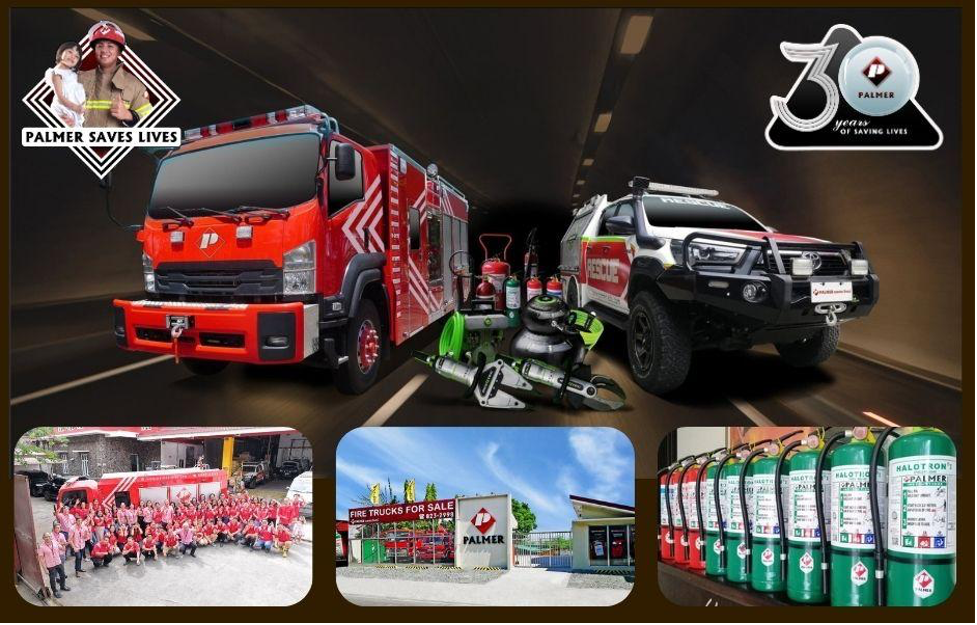
Palmer Asia has been part of the fire systems industry for over three decades, working across projects that range from commercial developments to industrial facilities.
In a sector where reliability is non-negotiable, longevity tends to reflect more than just time in operation. It suggests familiarity with evolving safety codes, changing technologies, and the practical realities of deployment in the field.
Industry observers note that companies that endure in fire protection are typically those able to adapt—whether to stricter compliance standards or to the growing technical demands of modern infrastructure.
Inside the Increasing Cost of Fire Equipment
Questions about the rising price of fire trucks have become more common in recent years, especially among public-sector buyers managing tighter budgets. But industry insiders say the explanation goes beyond simple cost increases.
Today’s fire trucks are a far cry from the basic response vehicles of the past. They are now equipped with advanced braking systems, onboard diagnostics, integrated communication tools, and enhanced safety features designed to protect both operators and the public. Many units are also custom-built, tailored to specific environments; whether navigating dense urban streets, servicing industrial facilities, or responding to high-risk hazards.
At the same time, stricter regulatory standards have raised the bar for manufacturing and certification. Compliance now demands higher levels of performance, safety, and reliability.
Together, these shifts have inevitably driven up costs—but they have also transformed fire trucks into far more capable, specialized, and mission-critical assets.
Global Forces, Local Effects
Pricing pressures are not driven by technology alone. Like many sectors reliant on imported components, fire systems have been affected by broader global supply chain challenges.
Rising material costs, particularly for steel and electronics, have had a direct impact on manufacturing. Shipping delays and higher freight charges have added further strain, while currency fluctuations continue to affect procurement in import-dependent markets such as the Philippines.
The result is a pricing environment shaped as much by global conditions as by local demand.
Looking Beyond the Price Tag
Despite these increases, safety professionals often caution against evaluating fire systems based solely on upfront cost.
Unlike other types of equipment, fire protection systems are not used every day, but when they are needed, they are expected to perform without fail.
This has shifted attention toward long-term considerations: durability, ease of maintenance, and consistency under pressure. In many cases, the more relevant question is not how much a system costs at purchase, but how it performs over time.
Lower-cost alternatives may reduce initial spending, but they can introduce harder-to-quantify risks, particularly in emergency scenarios.
Standards, Compliance, and Accountability
Fire protection is among the most tightly regulated areas of infrastructure, with equipment required to meet rigorous standards for performance, safety, and reliability.
Palmer Asia operates within this framework, aligning its processes with established regulations and industry benchmarks. Compliance is not merely procedural; it underpins trust between suppliers, clients, and the communities they serve.
As procurement comes under greater scrutiny, the ability to demonstrate strict adherence to standards has become essential. Palmer Asia approaches every bid with transparency and integrity, grounded in confidence in its systems and processes.
An Industry in Transition
The fire protection sector is evolving alongside the environments it serves. High-rise developments, mixed-use spaces, and industrial facilities each present different challenges, requiring systems that are more adaptable and often more sophisticated.
Technology is playing a growing role, from improved detection systems to more efficient response equipment. At the same time, the fundamentals, reliability, compliance, and usability remain unchanged.
Companies in the industry are balancing these demands, integrating new capabilities while maintaining proven performance standards.
Building Confidence Through Clarity
As stakeholders place greater emphasis on accountability, transparency has become a recurring theme in the sector.
Clear specifications, verifiable certifications, and straightforward communication around capabilities and limitations are now expected, not optional.
For providers, this means going beyond product delivery, toward offering information that allows buyers to make informed decisions.
Looking Ahead
Fire protection is unlikely to draw widespread attention, but its importance continues to grow as cities become denser and infrastructure more complex.
In the Philippines, where development shows no signs of slowing, the need for dependable fire systems will remain closely tied to broader economic growth.
For companies with established experience and a steady approach to compliance and quality, the challenge is less about keeping up, and more about staying consistent in a field where consistency matters most.
About Palmer Asia
Palmer Asia is a fire protection solutions provider with over 30 years of experience in the industry. The company supports a range of sectors by supplying fire safety systems that align with applicable standards and operational requirements.