DTI Opens First ASEAN Creative Industries Expo, Showcasing ₱2.12-Trillion Philippine Creative Economy

The Department of Trade and Industry (DTI) officially opened the first-ever ASEAN Creative Industries Expo by Malikhaing Pinoy (ASEAN MPEx) at the SMX Convention Center Aura in Taguig City, showcasing the strength and global competitiveness of the Philippines’ ₱2.12-trillion creative industry as a key growth driver for regional trade, the digital economy, and cultural exchange.

DTI Secretary Cristina A. Roque emphasized that under the clear directive of  President Ferdinand R. Marcos Jr., the DTI is committed to providing artists and  creators with the necessary platforms to scale local talents into international  powerhouses. 

Highlighting the sector’s momentum, Secretary Roque reported that the Philippine  creative economy expanded to ₱2.12 trillion, contributing 7.6 percent to the  national Gross Domestic Product. This performance includes ₱320 billion in  creative goods exports and ₱427 billion in creative services exports. Digital  interactive goods and services, including game development and animation,  account for nearly a fifth of the total creative output and are projected to reach USD  2.6 billion by 2027. 

To ensure these creative talents gain the market access they deserve, Secretary  Roque emphasized that the upcoming Digital Economy Framework Agreement  (DEFA)—set for signing at the 49th ASEAN Summit in November—will establish  the world’s first region-wide digital trade agreement, streamlining cross-border  payments, data flows, and intellectual property protection across all ASEAN  Member States. 

“At the heart of any great nation lies its culture and heritage, and under the  Malikhaing Pinoy initiative, our creative industries generate a cultural ‘currency’ that  draws the world to our shores. As we lead ASEAN in 2026, we are turning local  creative talent into a regional export powerhouse. And with DEFA, we provide a  single, streamlined set of rules to access regional markets, secure digital  payments, and protect intellectual property—solidifying the Philippines’ position as  Asia’s Premier Creative Hub by 2030,” Secretary Roque said. 

Secretary Roque also highlighted the proposed ASEAN Center of Excellence for  Creative Industries (ACE-CI), a Priority Economic Deliverable under the  Philippines’ 2026 ASEAN Chairmanship. Envisioned to be hosted in the  Philippines, the Center will serve as a permanent regional hub for policy research,  capacity-building, and market development.

A Message of Support was delivered by the ASEAN Secretariat, reaffirming the  role of the creative sector as a primary vehicle for fostering deeper regional  integration and driving inclusive economic growth across Southeast Asia. 

Organized by the DTI through the Philippine Creative Industries Development  Council Secretariat (PCIDCS), ASEAN MPEx brings together all nine creative  domains: Audiovisual Media, Creative Services, Cultural Sites, Digital Interactive  Media, Design, Performing Arts, Publishing and Printed Media, Traditional Cultural  Expressions, and Visual Arts. 

The exhibition floor features specialized interactive spaces, including the ASEAN  Malikhaing Pinoy Pavilion displaying digital interactive elements from ASEAN  Member States; a Government Services Pavilion offering business and intellectual  property support; a Coconut Industry Pavilion showcasing sustainable design  applications; a special preview of the country’s World Expo 2025 Osaka presence;  and a Philippine Gastronomy feature mounted in partnership with the Department  of Tourism (DOT). 

ASEAN MPEx 2026 runs through 19 September 2026 at the SMX Convention  Center Aura, featuring domain exhibits, live cultural performances, “Malikhaing  Pinoy Talks” with policymakers, and pitching sessions connecting creators with  global investors. The Malikhaing Pinoy Program remains DTI’s flagship initiative to  elevate the sector and realize the vision of becoming Asia’s Premier Creative Hub  by 2030.

Retirement Doesn’t Start at 65. It Starts with the Choices You Make Today.

 SMDC helps Filipinos prepare for retirement by building homes designed for every stage of life.

For many people, retirement feels like a milestone that’s decades away. It is often viewed as something to think about only after a long career or once the children have become independent. Increasingly, however, retirement is being shaped long before it arrives—through the choices people make while they are still building their lives.

One of the most important decisions is where to live.

A home is more than a financial investment. It influences how people work, stay connected with loved ones, access everyday essentials, and eventually enjoy the freedom they have worked hard to achieve. This is why SMDC looks at homeownership not simply as a purchase, but as a decision that can support people through different stages of life. Buying a home during one’s earning years allows that investment to evolve alongside changing needs and future aspirations.

Wind Residences

Planning early is not simply about preparing financially. It is about creating flexibility for the years ahead.

A well-located home can serve different purposes over time. It can support a growing family, become a reliable investment, welcome loved ones returning from overseas, or provide the setting for an active and fulfilling retirement. The right home continues to adapt as life changes.

For many Filipinos—including young professionals, OFWs, balikbayans, and families planning ahead—the focus is shifting from preparing only for retirement to preparing for the lifestyle they hope to enjoy in the future. Communities that offer accessibility, convenience, and everyday connections today are often the same communities that provide confidence tomorrow.

This is where SMDC’s approach to community building becomes especially relevant. By developing ready homes in well-connected locations close to transport, healthcare, retail, business districts, and essential services, SMDC enables homeowners to enjoy the benefits of their investment now while preparing for the years ahead. 

With communities designed to support life’s changing chapters, SMDC helps make the journey toward retirement easier and more flexible—and supports the Good Life homeowners want to enjoy in the years ahead. Start planning for the life you want by finding the right SMDC home today.

Visit smdc.com or call +63 917 555 7632 or +63 917 777 7632 to explore communities designed for every stage of life. 

CHED, British Council expand access to global qualifications for Filipino learners

The Commission on Higher Education (CHED) and the British Council have taken a significant step towards strengthening Transnational Higher Education (TNHE) in The Philippines. 

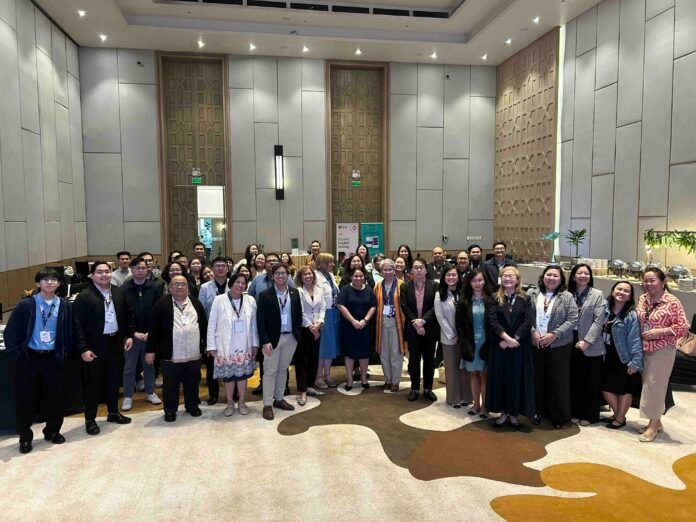
Earlier this month, CHED and the British Council convened more than 70 representatives from government agencies, higher education institutions, development partners, and international institutions to refine the Philippines’ TNHE National Strategy and its implementation roadmap through to 2030.

The strategy aims to connect Filipino learners with globally benchmarked education and industry-relevant skills in areas including technology, healthcare, engineering and business services. It supports the Philippines’ development priorities such as workforce competitiveness and growth of the digital economy.  

TNHE National Strategy positions international education partnerships as a tool to strengthen Philippine higher education and talent development. Through collaboration with UK institutions, drawing on the strengths of a globally recognised higher education sector that includes three of the world’s top 10 universities, Philippine universities can provide students with access to global expertise, innovative teaching approaches and internationally recognised qualifications, while remaining responsive to local industry and community needs.

Workshop participants also identified priority actions, governance arrangements, financing approaches and monitoring mechanisms to guide implementation of the strategy over the next four years.

“The TNHE National Strategy supports CHED’s Achieve Agenda 2030, particularly our commitment to internationalization. It creates global opportunities for Filipino students and faculty, brings quality international education to the Philippines’ human capital development, keeps higher education responsive to industry and workforce needs, and vitalizes governance that protects quality while enabling innovation,” says CHED Chairperson Shirley C. Agrupis in a recorded message. 

TNHE also expands pathways for Filipinos seeking international qualifications. By bringing UK education opportunities closer, it can widen access while helping develop the skills needed for a technology-driven economy. 

“Transnational higher education is most impactful when it is aligned with national priorities. By connecting Philippine institutions with leading international partners and drawing on the UK’s experience in international education partnerships, TNHE brings new knowledge, expertise and opportunities into the country, helping Filipino learners build the capabilities they need to participate and succeed in a changing global economy,” shared Lotus Postrado, the Country Director of the British Council Philippines.


Demand for international education continues to grow among Filipino learners. In the 2024-25 academic year, 1,225 Filipino students enrolled in UK higher education institutions, while 655 studied through UK TNHE programs delivered in the Philippines. This reflects the appeal of a UK higher education system that is widely recognised for its focus on employability and close collaboration with industry, helping prepare graduates with the skills needed to succeed in an increasingly competitive global workforce.

The figures highlight strong interest in international learning and the growing potential for partnerships between UK and Philippine institutions. 

“Education remains at the heart of the UK’s partnership with the Philippines.  Through Chevening scholarships and education, science and cultural partnerships, we are helping create opportunities, strengthen skills and deliver tangible benefits for communities. This strategy marks an important step in ensuring that Filipino learners can access world-class UK qualifications while building the skills their country needs for the future,” said Sarah Hulton, British Ambassador to the Philippines.  

CHED and the British Council will continue to work with partners to support the implementation and advance the role of transnational higher education in the Philippines’ long-term education and talent development agenda. 

PH partners with India’s NPCI to upgrade digital payments 

The Philippine government is tapping India’s NPCI International Payments Limited  (NIPL) to modernize the country’s digital payments infrastructure, accelerate  sovereign Government-to-Person (G2P) benefit payments and establish cross border digital payment connectivity. 

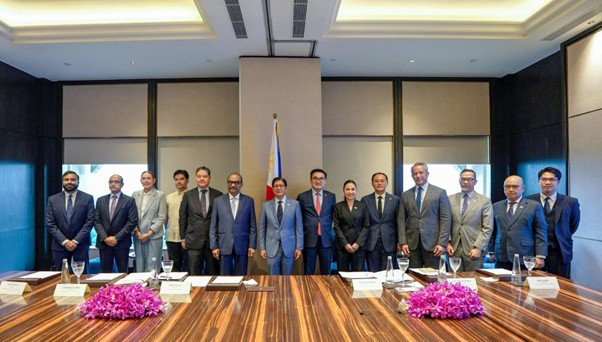
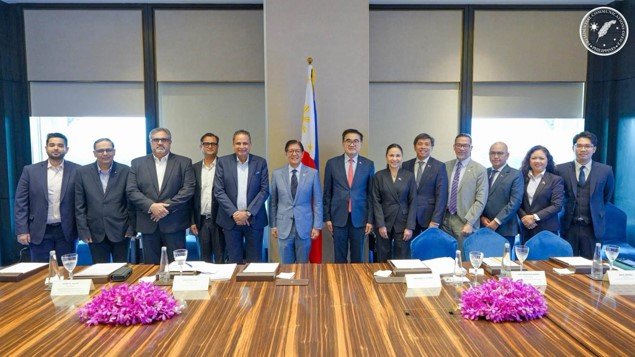
This was discussed during a business meeting on September 12 among President  Ferdinand R. Marcos Jr., Department of Finance (DOF) Secretary Frederick D. Go, Department of Trade and Industry (DTI) Secretary Cristina A. Roque, Department  of Information and Communications Technology (DICT) Secretary Henry Rhoel R.  Aguda, and NIPL Managing Director and Chief Executive Officer Ritesh Shukla. 

The meeting centered on leveraging India’s Unified Payments Interface (UPI)  technology stack to upgrade the Philippines’ digital payment ecosystem. A key  priority of the discussion was deploying UPI capabilities to enhance sovereign G2P  transfers through the Land Bank of the Philippines (LandBank), to improve the  speed, transparency, and efficiency of government benefit disbursements.  

“During our meeting with President Marcos Jr. and NPCI International, we agreed  to bring India’s UPI technology to the Philippines. This will allow LandBank to  distribute government financial aid much faster and make daily digital transactions  easier and cheaper for ordinary Filipinos,” Secretary Roque said. 

“By bringing India’s UPI technology to the Philippines, we will also directly empower  our MSMEs by making cross-border payments seamless and digital transactions  cheaper and more accessible. Connecting this system with QR Ph will enable our  local enterprises to easily accept payments from foreign tourists and international  buyers, driving sales and expanding their reach in the global digital economy,”  Secretary Roque added.  

“Following LANDBANK’s pioneering efforts to waive P2G fees and take the lead in  reducing the cost of digital transfers, we continue to look for ways to make digital  payments more affordable, efficient, and accessible. Through a potential  partnership with NPCI International and by exploring proven payment  technologies, we aim to lower the cost of delivering government services and make  them faster, more secure, and more responsive to the needs of the Filipino people,”  LANDBANK Chair and Finance Secretary Frederick D. Go said. 

Discussions also covered modernizing the national clearing network via the newly  merged Payments Network of the Philippines, Inc. (PNPI/ BancNet) and linking  India’s UPI with the Philippines’ QR Ph network, building on ongoing engagements  with InstaPay ACH and GCash.

To facilitate NIPL’s strategic entry and operational integration, the Philippine  government highlighted key institutional support mechanisms, including Green  Lane expedited processing under Executive Order No. 18 for strategic digital  infrastructure projects. Additionally, potential long-term fiscal incentive options  were outlined under the CREATE MORE Act (R.A. 12066) and the Strategic  Investment Priority Plan (SIPP) for qualified fintech and IT investments. 

Joining President Marcos Jr. and Cabinet officials at the meeting were Philippine  Ambassador to India Josel Francisco Ignacio, PTIC-New Delhi Commercial  Counsellor Rudolph Jay Velasco, Senior Representatives from NPCI International,  LandBank President and CEO Lynette V. Ortiz and LandBank Senior Vice  President Grace Ofelia Lovely V. Dayo. 

The DTI, together with the DOF and PTIC-New Delhi, reaffirmed its commitment  to facilitating inter-agency coordination with the Bangko Sentral ng Pilipinas  (BSP), LandBank and PNPI/BancNet to execute non-disclosure agreements and  fast-track technical implementation.

GMR eyes building and operating Sangley Point International Airport

The Philippine government reaffirmed its strong support for the GMR Group’s increasing investments in the country’s aviation infrastructure, particularly its interest in building and operating the Sangley Point International Airport (SPIA) in partnership with Cavitex Holdings Inc.

The expansion plans were discussed during a business meeting on September 12 with President Ferdinand R. Marcos Jr., Department of Finance (DOF) Secretary Frederick D. Go, DTI Secretary Cristina A. Roque, and GMR Group Chairman Srinivas Bommidala at Taj Mahal hotel in India. 

The meeting centered on GMR’s ongoing and planned investments in Philippine aviation and transport infrastructure in support of the government’s Build Better More program.

During the meeting, the Philippine delegation highlighted the significant economic potential of the SPIA development, which is projected to drive over P150 billion in direct investment and generate P500 billion in indirect economic impact. 

Positioned as a crucial new gateway to decongest the Ninoy Aquino International Airport (NAIA) and transform the Greater Capital Region, the project is expected to yield $300 to $500 million in government revenues and create 10,000 to 15,000 jobs.

Secretary Roque welcomed GMR’s continued confidence in the country. Since 2014, GMR has invested over P36 billion to develop landmark, award-winning airport infrastructure in Cebu and Clark.

Secretary Frederick Go likewise underscored the importance of continued investments in Philippine aviation infrastructure to expand the country’s capacity for growth and create more opportunities.

Beyond Sangley, GMR is also exploring opportunities to upgrade regional airport clusters in Bacolod, Tacloban, Busuanga and Laoag to boost local trade, tourism and regional development. The company is also actively participating in Clark Airport projects, including bids for logistics facilities that will support global cargo operators. 

To facilitate these large-scale infrastructure investments, Secretary Roque assured GMR of the government’s end-to-end support through key initiatives such as the CREATE MORE Act and Green Lane Expedited Processing (E.O. 18). The DTI remains ready to serve as the dedicated focal point in realizing these strategic developments.

Joining President Marcos Jr., Secretary Go, and Secretary Roque were Department of Interior and Local Government Secretary Jonvic Remulla, Department of Transportation Secretary Giovanni Z. Lopez, Philippine Ambassador to India Josel Francisco Ignacio, and Cavitex Holdings Inc. Chairman Luis Juan Virata.

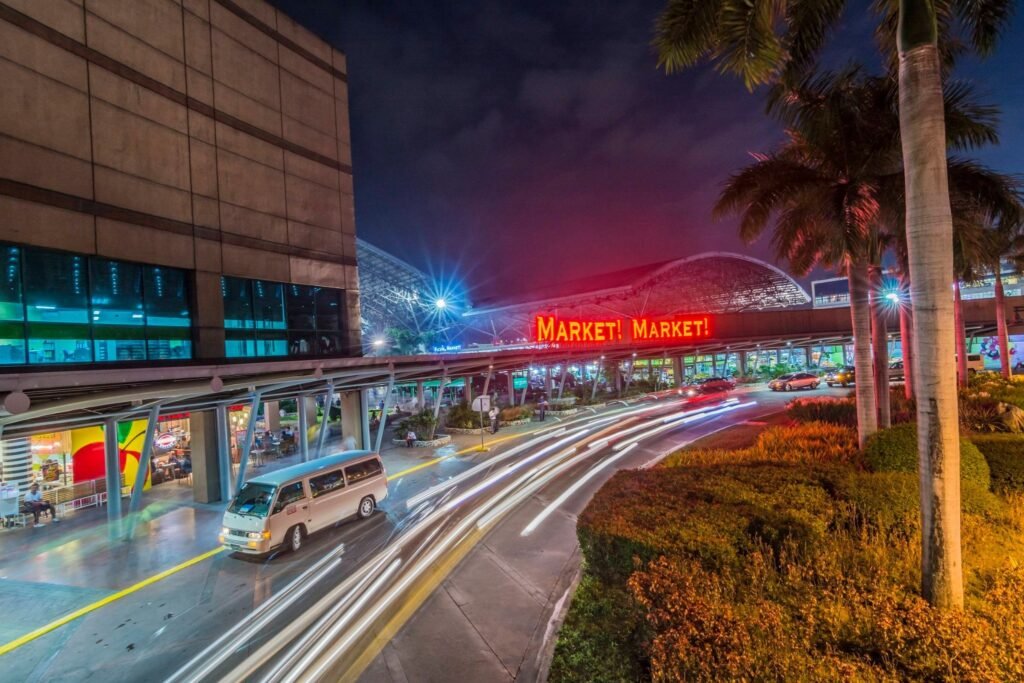
Market! Market! at 22: Where Everyday Finds Became Lasting Memories

Ask anyone who’s spent time in BGC, and chances are they have a Market! Market! story. Maybe it’s the fresh flowers you grabbed on the way to a first date, a weekend karaoke session after a long week, or that one time you swore you saw someone who’s now a K-pop idol performing on a random Tuesday. Whatever it is, there’s a Market! Market! memory in there somewhere.

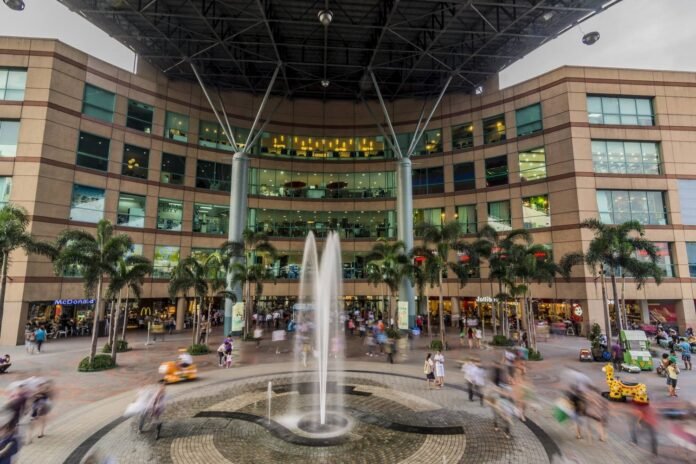
This September 16, the BGC landmark turns 22. And if there’s one thing that hasn’t changed in over two decades, it’s this: Market! Market! has always been a place where you go in looking for one thing, and walk out having found five more.

From Dampa to Destination

Long before BGC became the glass and steel skyline we know today, Market! Market! opened its doors with a simple, slightly unconventional idea: take everything Filipinos already loved, flowers from Dangwa, gadgets from Greenhills, the chaos-but-in-a-good-way energy of Divisoria, the fresh seafood and paluto of your favorite dampa, and put it all under one roof.

At the time, some thought it was a gamble. But if you’ve ever spent a Sunday afternoon wandering from the flower stalls to Fiesta Market to a random find you didn’t know you needed, you get why it worked.

“The fun is in the finds” – a promise since day one – endures as Market! Market! steps into its next chapter.

Where Small Dreams Became Big Business

Some of the best Market! Market! stories aren’t about the mall itself, they’re about the people who grew alongside it.

Over the last two decades, Fiesta Market became a starting point for many local vendors – whether that’s arranging fresh cut flowers for life’s milestones, bringing regional fruits and delicacies to the city, or putting together everyday toys. Alongside longtime staples like Tina Berin’s Flowershop, Rodem’s Fruits, Pelican Farms, and Edeng’s Toy Center, these homegrown stores put down roots here and never looked back.

And it’s not just the small businesses. Japan Home Centre opened its very first store at Market! Market! before going nationwide. Metro chose it for its first Metro Manila branch. Turns out, this mall has a track record of spotting winners early.

The “Market! Market! Theory”

Here’s some mall trivia for your next group chat: BINI, SB19, KATSEYE, and even The 1975 have all performed at Market! Market!, some of them well before they blew up.

This didn’t go unnoticed online, and it’s how the “Market! Market! theory” was born: perform here, and maybe, just maybe, something bigger is coming for you. Coincidence? Maybe. Fun to believe in anyway? Absolutely.

22 and Not Slowing Down

So, what’s next for a mall that’s basically grown up alongside its own community? More of the same spirit that got it here, just with an even longer runway.

Market! Market!’s lease with BCDA has officially been extended for another 12 years, with fresh investment coming in to upgrade the mall and its facilities. It’s also set to become even more connected to the city, with the upcoming Metro Manila Subway’s Bonifacio Global Station planned right within the property.

But growth doesn’t mean losing what made it special in the first place.

“What I hope we never lose is the feeling of this place. That it is open. Lively. A little unpredictable,” says Meean B. Dy, chairman of Station Square East Commercial Corporation and president and CEO of Ayala Land Inc. “And that there is always room for the next small business, the next artist, the next idea that deserves to be found.”

Twenty-two years in, Market! Market! is still doing what it’s always done best: giving people, businesses, and ideas a place to be discovered.

So, what will you find this time?

Catch up with Market! Market! in Bonifacio Global City, or explore more at www.ayalamalls.com.

TELUS Digital Philippines refurbishes a 52-year-old high school in Iloilo, as company marks its fifth year in the region

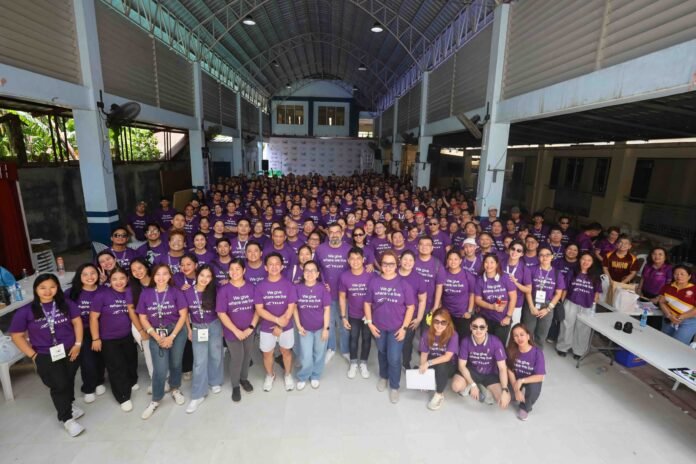
TELUS Digital Philippines team members and volunteers take part in the refurbishment of Mandurriao National High School in Iloilo as the company marks its fifth year in the region.

More than 240 volunteers from TELUS Digital Philippines recently came together at Mandurriao National High School to refurbish classrooms and campus facilities for more than 3,200 students. The day also included sessions to help young people build skills for safer and more responsible use of digital platforms. The event marks the fifth anniversary of TELUS Digital’s Iloilo sites, during which team members have mentored, fundraised and given back to the communities where they live and work.

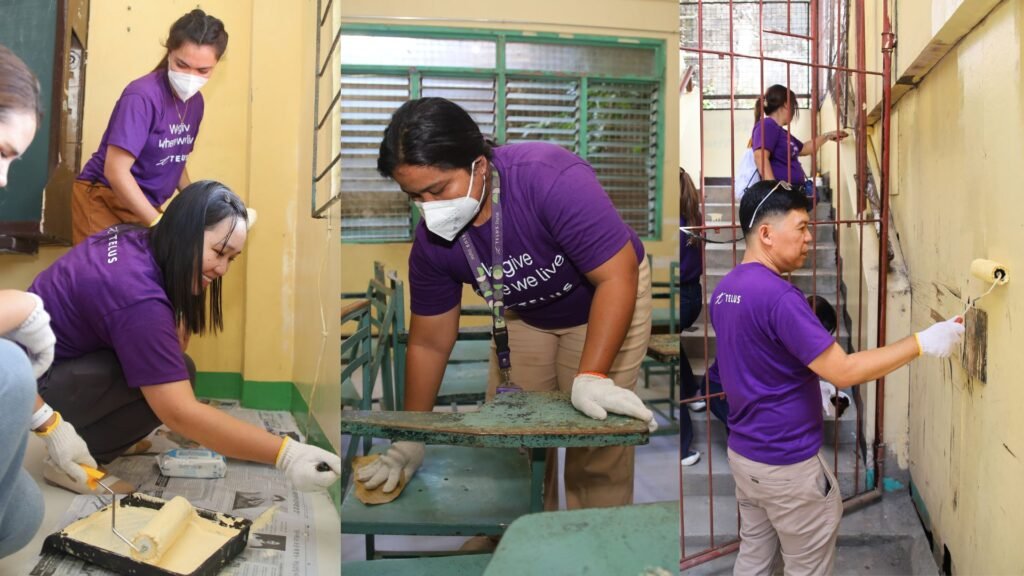
Held under TELUS Digital Philippines’ TELUS Days of Giving (TDOG) initiative in support of the Department of Education’s Brigada Eskwela program, the effort brought together team members from the company’s Strata and Pavia sites. Volunteers worked on three school buildings, repainting 15 classrooms, seven hallways and five staircases and restoring over 180 student chairs. The 52-year-old school serves more than 3,200 students and 160 teachers.

Thirty high school students also took part in a TELUS Wise® digital literacy session, where they learned practical ways to stay safe online and become more responsible users of social media.

The school refurbishment and digital literacy session reflect two important dimensions of education: creating environments where students can learn well, and equipping them with the knowledge to navigate the digital spaces that are now part of everyday life.

“For us in Iloilo, volunteerism is about truly being part of the community. Our team members live and work here, so being able to contribute to a school that serves thousands of students makes the impact feel very immediate and personal,” said Jonabee Catura, Senior Director and Iloilo Site Lead, TELUS Digital Philippines. “Even though we’re here  for one day, the spaces we help improve, and the opportunities they create for students, help serve the community for much longer.” 

The Philippines is currently facing an estimated 165,000-classroom shortage, with the gap projected to grow by another 58,000 to 81,000 classrooms by 2040. Learning outcomes are also  a concern, with international assessments pointing to persistent challenges in reading, mathematics and science across the country.

Brigada Eskwela brings together schools, communities, private organizations and volunteers to help address some of these challenges by improving school facilities and creating more supportive environments for students and teachers.

“Volunteerism creates a different kind of connection between an organization and the communities where it operates,” said Rajiv M. Dhand, Senior Vice President of Global Customer Experience and Trust & Safety Operations at TELUS Digital. “It’s our team stepping out from behind their desks to give something real: their time, their hands, their hearts. In Iloilo, that meant transforming the spaces where students learn, and helping young people build the skills and confidence to thrive in an increasingly digital world. This is who we are, and we couldn’t be prouder.”

Since 2021, 780 TELUS Digital team member volunteers in Iloilo have contributed more than 3,780 volunteer hours to Brigada Eskwela activities, helping improve learning environments for students across the province.

The company has also supported initiatives that expand access to education, health services and opportunities for underserved communities in Iloilo. Through the TELUS Digital Philippines Community Board, the company’s grant-giving foundation, TELUS Digital Philippines has supported local organizations including Walk and Work Foundation, Inc., to provide assistive devices and educational support for children and youth with disabilities, the Center for Agrarian Reform and Rural Development to bring basic health services to underserved farming communities in Passi City, and the University of San Agustin Research and Development Foundation Inc. to advance culturally responsive, play-based learning for children in Indigenous Schools of Living Tradition in Iloilo and Antique. This partnership was recognized with the Outstanding CSR Project for Education award from the League of Corporate Foundations (LCF) in June.

Through TELUS Days of Giving and the TELUS Digital Philippines Community Board, TELUS Digital Philippines continues to bring its team members closer to the communities where they live and work, turning volunteer time into tangible support for students and schools.

To learn more, visit telusdigital.com

DTI: iSON Group expands operations in PH with $375M investments in digital infra, agrotech, healthcare and BPO

President Ferdinand R. Marcos Jr. welcomed iSON Group’s growing investments in the Philippines, spanning digital infrastructure, modern agriculture, healthcare, and business process outsourcing (BPO).

The company’s operations and new expansion initiatives were presented during a business meeting on September 12 with President Marcos Jr., DTI Secretary Cristina A. Roque, Department of Finance (DOF) Secretary Frederick D. Go, Department of Information and Communications Technology (DICT) Secretary Henry Rhoel R. Aguda, and iSON Group leadership led by Founder and Chairman Vivek Gupta.

Secretary Roque highlighted how iSON Group’s multi-sector projects align with the country’s economic goals.

“iSON Group’s expansion shows that our investment reforms are working and that global companies trust the Philippines. They are expanding here because of our strong economic growth, steady business environment, and talented workforce. Their investment in telecom, agriculture, healthcare, and BPO bring in capital and technology that will bring better connectivity, strengthen our local industries, and create quality jobs for Filipinos,” Secretary Roque said.

iSON Group’s digital infrastructure arm, iSON Tower Ltd. Inc.—backed by US private equity firm TPG Peppertree Capital, the Asian Development Bank (ADB), and Security Bank—has already deployed $65 million to construct 450 telecom towers across NCR, Luzon, Visayas, and Mindanao under the DICT Common Tower Policy, employing over 120 direct staff.

Over the next 10 years, iSON Tower plans to invest up to $300 million to scale its network to 3,000 towers, building 300 to 400 towers annually, creating over 100 additional direct jobs and expanding its contractor network to 1,000 workers.

In addition to its telecommunication infrastructure rollout, iSON Group highlighted $75 million in new and expanded investments across strategic growth sectors:

● iSON Agrotech ($50 Million New Investment): A landmark Agro-Solar project combining 50 hectares of modern protected agriculture (greenhouse and polyhouse systems) with a 40 MWp renewable solar PV facility in New Clark City, executed under a Joint Venture with the Bases Conversion and Development Authority (BCDA). Initial cultivation will focus on capsicum, cherry tomatoes, and cucumbers before expanding to 20–25 crop varieties.

● iSON Health ($15 Million Expansion Investment): Expansion of digital healthcare services including 24/7 bilingual (Tagalog/English) teleconsultation, access to second medical opinions through a network of over 300 global partner hospitals, and full-service medical tourism services for critical care.

● BPO Expansion ($10 Million Expansion Investment): Investment in expanded contact center operations servicing major domestic telecommunications providers, Globe Telecom and Smart Communications, prior to integrating global offshoring workloads from South Africa, Egypt, and India.

Investment czar Secretary Frederick Go said, “iSON Group’s continued expansion across multiple strategic sectors demonstrates the success of the administration’s investment reforms and that the Philippines is becoming a destination of choice for global investors. These investments bring in capital, technology, and innovation while creating quality jobs and opening new opportunities for Filipinos.”

To support iSON Group’s operations in the country, Secretary Roque reassured company executives of the Philippine government’s key investment facilitation measures including:

● CREATE MORE Act: Under the Strategic Investment Priority Plan (SIPP), qualifying projects may access extended fiscal incentives for 14 to 26 years, including a reduced 20% Corporate Income Tax rate or flexible Income Tax Holidays.

● Green Lane Expedited Processing (E.O. 18): Managed through the One-Stop Action Center for Strategic Investments (OSAC-SI), Green Lane designation streamlines regulatory approvals and permit processing across national and local government agencies.

Joining President Marcos Jr., Secretary Roque, Secretary Go, and Secretary Aguda at the meeting were Philippine Ambassador to India Josel Francisco Ignacio and Commercial Counsellor Rudolph Jay Velasco. Representing iSON Group were Chairman Vivek Gupta, CEO Rahul Chaudhary, Vice President for Corporate Strategy Sudhir Loomba, General Manager for Strategy and Investments Sarthak Gupta, and Country Manager Rahul Singh.

Shopee 9.9 Records Strong Gains as Filipinos Start Holiday Shopping

9.9 sees higher activity from fulfillment to discovery, as more orders move through Shopee while Filipinos engage with creators and content.

Shopee kicked off the holiday shopping season with strong 9.9 results, as Filipinos turned to the platform to shop, discover products, and engage with content.

Leading overall growth, orders processed through Fulfilled by Shopee (FBS) surged 2.5 times compared to 9.9 last year. The campaign also saw a rise in active affiliates and strong engagement across Shopee Video, Drama, and Live.

The growth in FBS comes as Shopee continues to expand the fulfillment support available to sellers during major shopping periods. Through FBS, sellers can store products within Shopee’s fulfillment network across Luzon, Visayas, and Mindanao, bringing inventory closer to buyers while Shopee handles storage, packing, shipping, and returns.

For shoppers, this means faster deliveries. FBS orders typically arrive within 1-2 days in Metro Manila and 3-5 working days in Visayas and Mindanao, versus 7-10 working days for non-FBS sellers in the region.

Content-led shopping surges this 9.9 as content ecosystem expands

Active Shopee Affiliates more than doubled compared to last year’s 9.9 campaign, giving shoppers more opportunities to discover products through trusted creator recommendations and video content.

The campaign also saw increased engagement across the platform, with shoppers spending more time watching content on Shopee Video, Drama, and Live. Watch time across Shopee Video and Drama surged 79% year-on-year, while Shopee Live attracted over 3.7 million viewers—a 73% jump compared to an average day.

As content becomes increasingly embedded in the shopping journey, e-commerce becomes more inclusive, allowing Filipinos to not only shop and sell but also to participate as creators who can influence discovery and earn from it.

“The 9.9 results give us a good indication of how Filipinos are starting to shop for the holidays. Our role is to make sure shoppers get what they need reliably, sellers can keep up with the demand, and creators have more opportunities to connect people with the right products,” said Vincent Lee, Head of Shopee Philippines. 

9.9 marks the start of the holiday shopping season, with activity expected to build as Christmas draws closer.

Cagayan Valley MSMEs Generate Over P15 Million in Sales, Business Leads

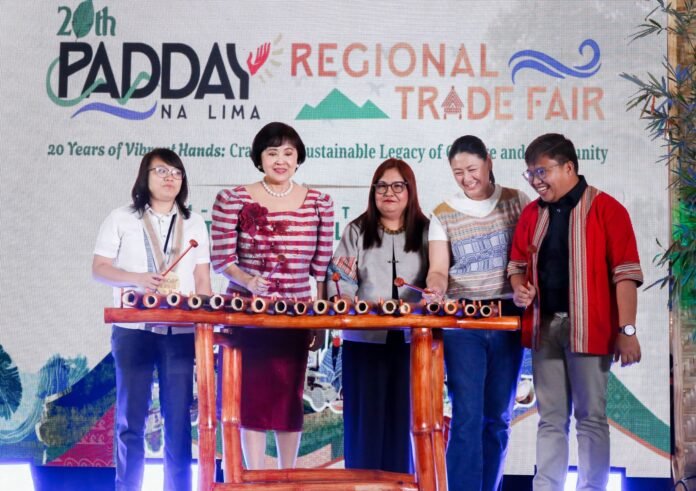
Micro, small and medium enterprises (MSMEs) from Cagayan Valley generated over P15 million in direct sales, booked orders and pending negotiations during the 20th Padday na Lima Regional Trade Fair, according to Department of Trade and Industry (DTI) Region 2. 

Held from August 24 to 30 at Festival Mall, Alabang, Muntinlupa City, the event featured more than 100 MSMEs from Batanes, Cagayan, Isabela, Nueva Vizcaya and Quirino. Operating under the theme, “20 Years of Vibrant Hands: Crafting a Sustainable Legacy of Culture and Community,” the milestone exhibition recorded P15,142,401 in total sales and market opportunities.

To support long-term commercial growth, DTI Region 2 connected participants with institutional buyers, retail clients and business partners through business-to-business matching sessions and digital selling channels. 

The agency also relaunched the Padday na Lima Webshop 2.0, providing local entrepreneurs with a permanent e-commerce platform to showcase and sell their products beyond the physical event.

DTI Region 2 Regional Director Ma. Sofia Narag noted that two decades of trade exposure have helped regional businesses adapt to changing market conditions by embracing digital tools and refining their product development based on customer feedback. 

“They’ve learned their lessons for every trade fair that we do. They keep on improving,” Narag said, emphasizing that the commercial gains extend beyond individual business owners to benefit their local communities.

For many participants, the annual fair provides crucial access to major urban markets. Healthy Foods & Gifts Enterprises owner Dolores Gandia Casem of Nueva Vizcaya, shared that participating in DTI trade fairs since 2015 has allowed her herbal tea business build a strong customer base outside their home province. 

Similarly, Tesoro’s Bamboo Manufacturing Products owner Joseph Tesoro, credited DTI’s ongoing support with helping his enterprise recover from zero sales during the pandemic. Today, the business manufactures and distributes handcrafted lampshades, hats, flower vases and home decor to a growing national market. 

The exhibit also serves as a launching pad for community-based social enterprises. Gomez Ethnic Women’s Weaving Association president Evangeline Ayao-ao leveraged the platform to bring traditional indigenous textiles to a wider consumer audience. With DTI’s guidance, what started as a small local initiative has expanded into a structured association that employs and trains local weavers, while also integrating zero-waste practices by upcycling textile scraps into modern fashion designs.

Throughout the week-long fair, visitors engaged with Cagayan Valley’s rich heritage through interactive cultural showcases, artisan craft demonstrations, regional food and wine tastings, a live fashion show and provincial trade pavilions featuring sustainable products made from local bamboo, abaca, coconut and handwoven fabrics. 

Now on its 20th year, Padday na Lima remains a vital growth engine for Northern Luzon’s local economy—helping entrepreneurs digitize operations, establish broader distribution channels, and scale their businesses while preserving the region’s traditional craftsmanship.