Proving that trade exhibitions offer far more than simple product exposure, the Department of Trade and Industry’s (DTI) 2026 Coconut Philippines Trade Fair generated P309.57 million in total sales.
The impressive figure marks a major milestone for Filipino coconut enterprises following the event held from August 26 to 30 at the SMX Convention Center Manila.
This year’s fair brought together 300 micro, small and medium enterprises (MSMEs) from across the Philippines. The sales performance represents a massive leap from the P96.9 million generated by 213 participating businesses during last year’s event.
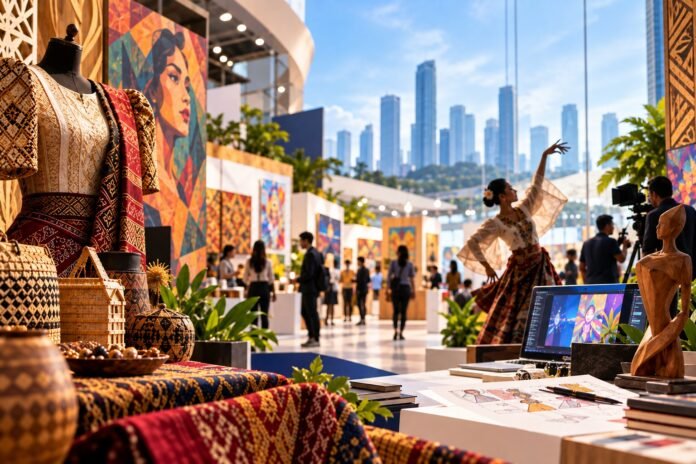
Participating “cocopreneurs” showcased a wide variety of value-added products across food and beverage, health and wellness, personal care, home and lifestyle items, craft, and sustainable non-food materials. The strong turnout highlights both an expanding local coconut industry and the growing capacity of domestic businesses to meet diverse consumer and commercial demands.
Held in conjunction with National Coconut Week, the fair demonstrated a collaborative, whole-of-government approach. DTI’s market-development strategies in tandem with programs led by the Philippine Coconut Authority (PCA) and partner agencies under the Coconut Farmers and Industry Development Plan (CFIDP).
As the lead implementing agency, the PCA coordinates targeted initiatives designed to strengthen the coconut sector and raise incomes for local farming communities.
The wider CFIDP ecosystem also supports total industry growth—funding farmer assistance, cooperative training, research, technology adoption, product innovation, and enterprise building.
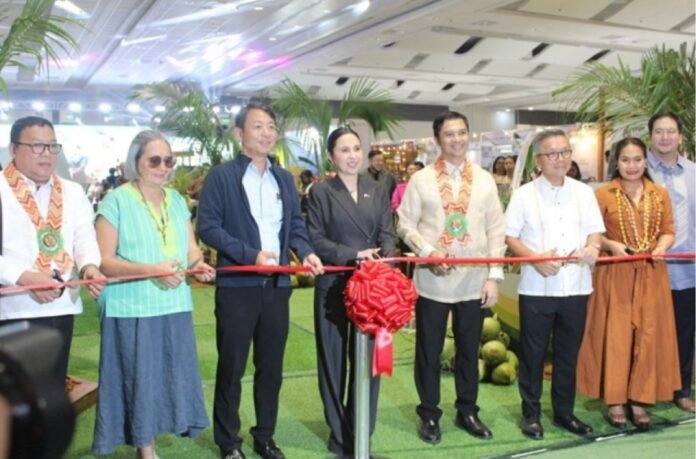
The event kicked off with a ribbon-cutting ceremony led by DTI Secretary Cristina A. Roque alongside key PCA leadership. Highlights of the opening included the release of the CFIDP Coffee Table Book, the launch of the 2022–2025 CFIDP Terminal Report documenting key milestones and beneficiary stories, and the debut of the official CFIDP website to streamline public access to industry resources.
To maximize commercial opportunities, the event featured a dedicated Buyers Lounge. Here, coconut MSMEs met directly with corporate and institutional buyers to pitch product lines, discuss sourcing requirements, and secure long-term business partnerships.
Ultimately, the success of the 2026 COCONUTPhilippines Trade Fair reinforces how research, technology, and market development can align under unified government leadership to create sustainable, high-value economic opportunities for Filipino coconut farmers.
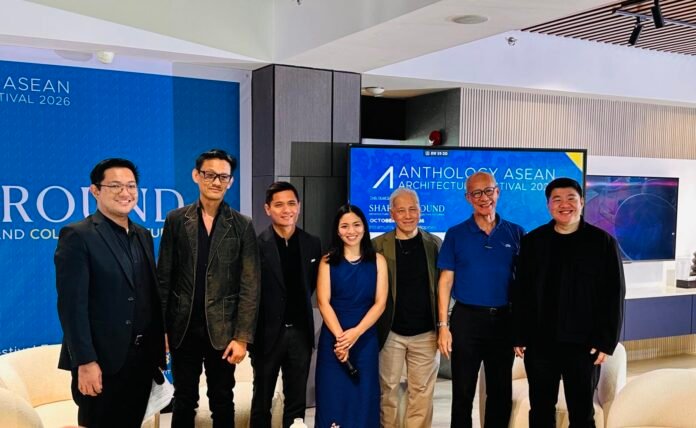
Arch. Jose Mari Tan; AJ Javier, managing principal, Javier Design Studio Manila; Benjee Mendoza, co-founder and principal architect, BAAD Studio; Rebecca Plaza Ti, managing director, WTA Architecture and Design Studio; Paulo Alcazaren, principal landscape architect, PGAA Design; Jose Pedro ‘Bong’ Recio, principal architect, Rchitects, Inc.; and William Ti Jr., festival curator, founder of Anthology Festival, and principal architect of WTA Architecture and Design Studio.
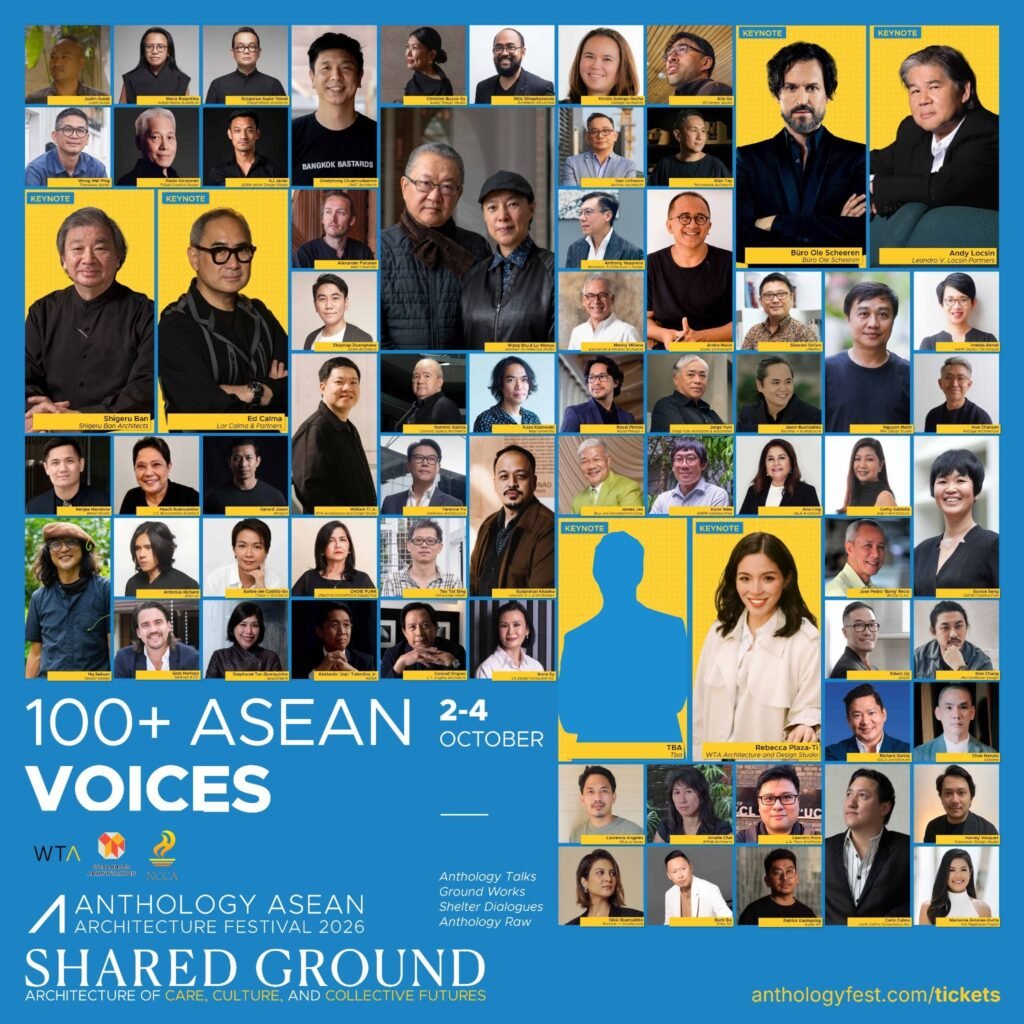
Hosted in Manila’s historic Intramuros during the Philippines’ ASEAN 2026 hosting, the three-day festival will convene 128 speakers—including Shigeru Ban and Ole Scheeren—alongside ten Filipino × ASEAN installations, regional dialogues and public forums.
Anthology ASEAN Architecture Festival 2026 will put the Southeast Asian nation at the centre of this year’s architecture and design conversation. Taking place on October 2–4, 2026, at Intramuros, Manila, the festival will bring together architects, designers, cultural practitioners, government leaders, institutions, students, communities and the public under the theme “Shared Ground: Architecture of Care, Culture, and Collective Futures.”
Organized by WTA Architecture & Design Studio in partnership with the City of Manila, Intramuros Administration, and National Commission for Culture and the Arts (NCCA), this year’s Anthology Festival is envisioned to be a significant industry, civic and cultural event—one that connects architecture and design with heritage, public life, governance and the future of Southeast Asian cities. The festival is supported by main sponsors Boysen, Fasclad, Glassbox, Omni and Midea.
With 128 speakers from the Philippines, Singapore, Indonesia, Thailand, Vietnam, Cambodia and beyond, Anthology 2026 will feature three international keynotes, 14 Filipino × ASEAN conversations, cross-sector roundtables, ten regional installations, open presentations and evening forums, with an expected audience of 4,000.
“Anthology is making ASEAN the starting point for this edition—not simply as a geographic category, but as a field of shared conditions, ideas and possibilities,” says William Ti Jr., festival curator and founder and principal architect of WTA Architecture and Design Studio. “Shared Ground asks what we can learn from one another while respecting what makes each city and community distinct.”
Since 2016, Anthology has held seven editions, welcomed more than 20,000 participants and brought together 455 speakers from the Philippines and around the world. This year’s regional focus marks a new chapter for the festival, expanding its role as a platform for Southeast Asian exchange and thought leadership.
Shared Ground: Architecture for a Region in Transition
“Shared Ground” reflects the belief that architecture is more than buildings. It is also about how people live together, how public spaces are shaped, how communities respond to climate and change, and how culture and memory are carried into the future.
The festival will explore three interconnected ideas over three days. Each day connects one of the festival’s themes to a defining question and an international keynote.
October 2 — Care: What is owed to a building and its people after ribbon-cutting?
Pritzker Prize laureate Shigeru Ban will open the festival with a keynote on Care. His humanitarian work with paper structures, temporary buildings and disaster-relief housing demonstrates how emergency architecture can be innovative, dignified, resource-conscious and rigorous.
The discussion will connect to the Philippines’ own experience with emergency architecture. In 2020, WTA delivered 75 quarantine facilities with more than 3,500 beds, raising questions about how architecture can respond quickly without sacrificing dignity—and what responsibility remains after a crisis.
October 3 — Culture: How can architecture hold shared memory without fixing it into a static image?
The keynote for Culture will be announced in the coming days.
The day offers a timely lens for considering heritage and public life in Intramuros, where preservation, identity, tourism, everyday use and urban change exist in constant conversation.
October 4 — Collective Futures: How do we negotiate the futures of our cities across differing needs and finite resources?
Ole Scheeren will close the festival with a keynote on Collective Futures. Through his work across Asia, Scheeren has explored density as a social condition to be designed, demonstrating how large-scale buildings can support community and shared life—not merely accommodate floor area.
For a region urbanising at extraordinary speed, the closing conversation will examine how cities can grow while remaining inclusive, connected and collectively shaped.
“At the heart of Anthology 2026 is the belief that “buildings only become architecture once they are shared.” A building becomes architecture through the lives that unfold in it, the communities that use it and the public life it supports,” says Ti.
ASEAN Designing Its Own Future
Anthology 2026 does not propose a single Southeast Asian model. Manila is not Jakarta; Bangkok is not Singapore. ASEAN cities have different histories, climates, economies, cultures and needs.
Instead, the festival will create a platform for the region to learn from itself while remaining grounded in the specificity of each place. Government and public-sector participation is expected to represent approximately 15 percent of the audience, bringing policy, governance and the public interest into direct conversation with design and development.
“We are not looking for one imported answer to the future city,” says Ti. “The region is already generating its own knowledge and models. Anthology is a place to make those ideas visible, put them into conversation and ask what we can build together.”
Intramuros as Shared Ground
For this edition, Intramuros will serve as more than the festival venue. The 400-year-old walled city will become a protagonist in the program, with talks, installations, roundtables and evening forums unfolding across its historic spaces.
Audiences will encounter questions of memory, access, material, public space and collective life while moving through a living urban environment where heritage and change meet.
“We want the festival to leave the conference hall,” says Ti. “In Intramuros, the city itself becomes part of the discussion. It is not a backdrop; it is shared ground.”
The program will include:
Anthology Talks: Fourteen Filipino × ASEAN conversations on themes including Culture is not a Style, Architecture Without Heroes and Care Without Control.
Shelter Dialogues: Roundtables pairing an ASEAN architect, a Filipino architect and a government leader in sessions such as Public Good, Private Power and Governing the Future We Share.
Ground Works: Ten Filipino × ASEAN collaborations installed throughout Intramuros, including Thresholds of Access, Material Memory and Local is Future.
Anthology RAW: An open platform for emerging work, unfinished ideas, new research and perspectives, with moderated critics responding to each presentation.
Living Anthology Exhibition: A living exhibition showing the evolving positions on Shared Ground throughout the course of the festival, on view until December at the Centro de Turismo Intramuros.
After Dark: Evening forums bringing architecture into conversation with culture, history and public life after sunset.
Publications:WTA Shared Ground Artbook, narrated by Potato, the studio cat, explores eleven WTA projects in a playful and accessible way. Field Notes is a post-festival publication documenting the ideas and moments collected from the festival.
Anthology ASEAN Architectural Festival 2026 is designed for architects and designers, but it is equally an invitation to students, artists, educators, cultural workers, policymakers, developers, communities and anyone invested in the future of cities. For the full program and registration details, visit anthologyfest.com.
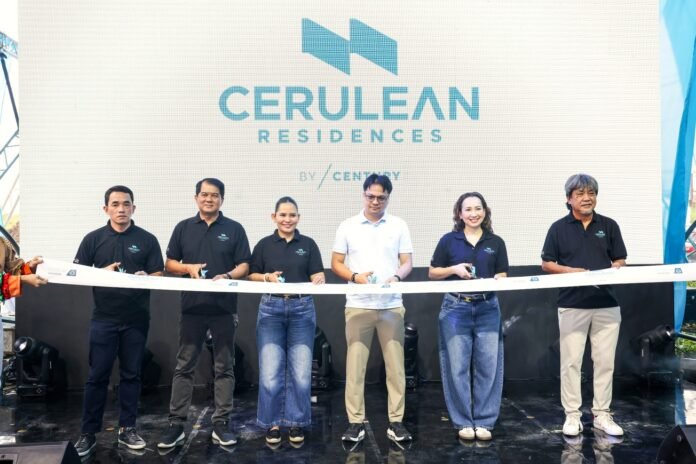
Century Properties and General Trias, Cavite Local Government officials officially launch Cerulean Residences, the developer’s 25-hectare premium horizontal residential development. (From Left) Engr. Xerxes Delgado – CPG Head of Project Development and Technical Operations Division, Arch. Bernard Artates – CPG Head of Design and Innovation Group, Jennifer dela Cruz – CPG SVP for Corporate Growth Strategy, San Francisco, General Trias Barangay Chairman, Kap. Ryan T. Cantor, Julienne M. Cruz – CPG Vice President Corporate Communications and Marketing, and Engr. Lauro Reyes – CPG Head of Construction Management.
Century Properties Group (CPG) is trading high-rises for front yards, officially opening the show village for its new 25-hectare development in General Trias, Cavite.
The developer formally launched the model homes for Cerulean Residences this week, marking a major pivot from its usual vertical condominiums to a fully master-planned house-and-lot community.
For decades, CPG built its brand on amenity-heavy urban towers. Now, it’s translating that same beach-inspired lifestyle seen in projects like Azure in Parañaque and Pampanga, and Acqua in Mandaluyong into a traditional suburban neighborhood.
Bringing the beach to the suburbs
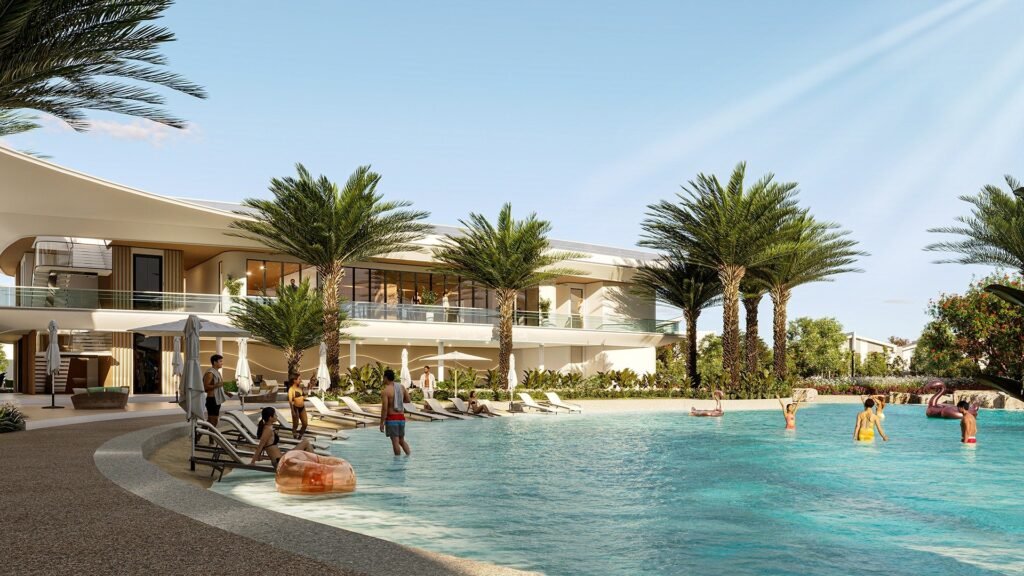
Designed by Singapore-based Pomeroy Studio, the same architectural firm behind CPG’s Azure and Acqua projects, Cerulean Residences leans heavily into its name and water-inspired theme.
The estate is divided into three main zones: active spaces for sports and fitness, meditative green areas, and the immersive water attractions that have become a CPG trademark.
“Filipino families have always gravitated toward the water,” CPG Managing Director Carlo Antonio said. “What we learned from Azure and Acqua is that people do not just want to visit that feeling on a holiday, they want to come home to it.”
Cerulean Residences Central Amenity – Man-Made Beach Pool
Adaptable spaces
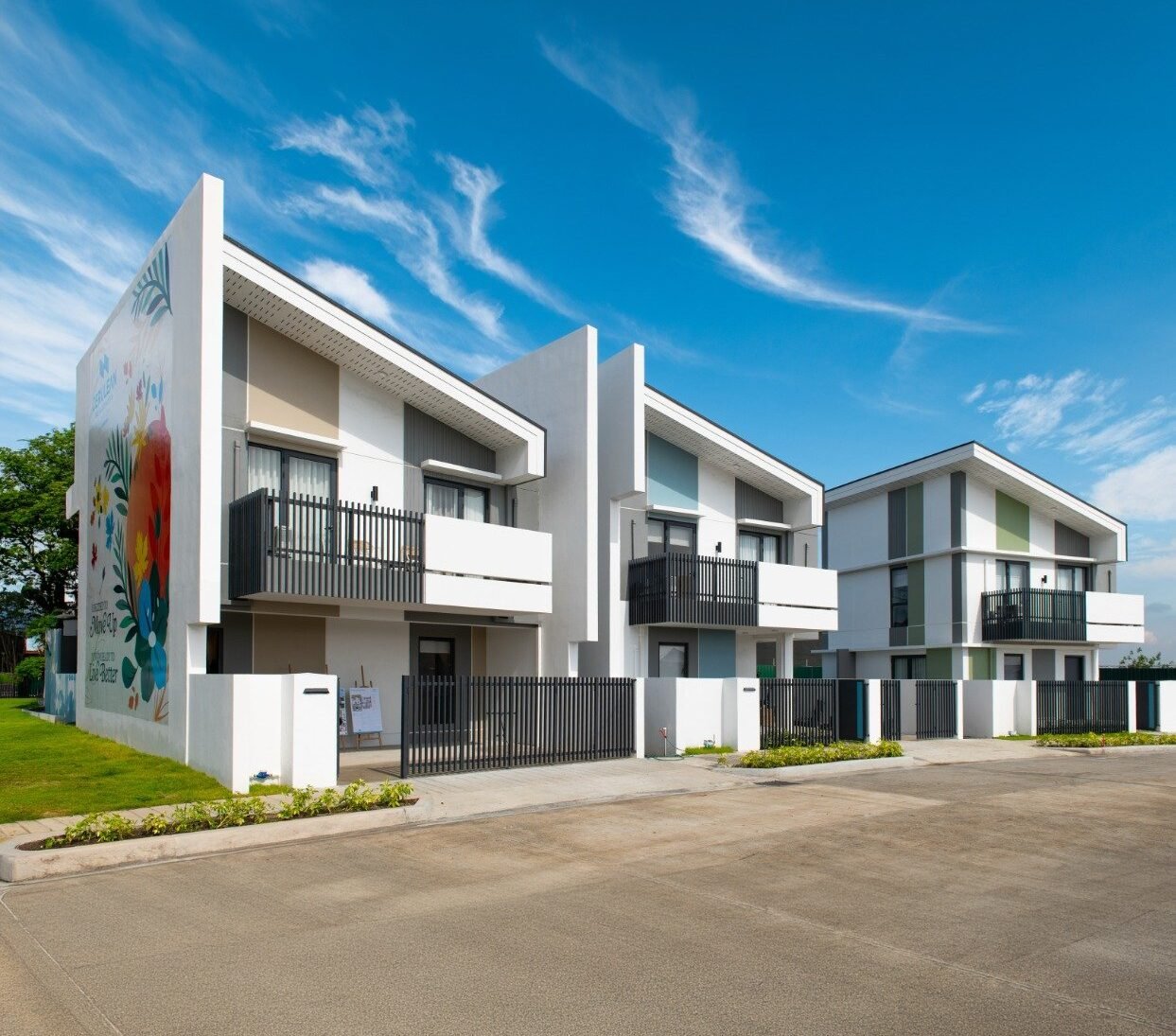
The newly opened show village gives buyers a first look at the two-storey model homes, which feature contemporary, asymmetrical roofs and minimalist interiors. Staying true to the estate’s overall theme, the home models take their names from beaches. Taking it up a notch, Century Properties ensures that upon delivery, the homes already come with a perimeter fence, a gate, and a 2-car garage with an EV charger provision.
The 1,100 homes planned for the community were designed with flexibility in mind. The layouts feature optimized depths for natural light and are built to adapt as families grow, careers change, or residents shift to work-from-home setups.
“A house should be able to keep up with the family living in it,” Antonio noted.
The Cerulean Residences Show Village
A self-contained hub
Located in Barangay San Francisco along Arnaldo Highway, the project positions itself as highly accessible but comfortably removed from Metro Manila’s congestion. The site sits near major thoroughfares like Governor’s Drive, Aguinaldo Highway, and the Cavite-Laguna Expressway (CALAX).
To support the residential enclave, CPG is also developing Century Lifepark, a commercial strip set to rise just outside the village gates to provide retail and daily essentials for both residents and the surrounding Gen Trias market.
Despite the premium amenities, CPG is pitching the project as a realistic upgrade for growing families.
“Move Up, Live Better is what four decades of building has taught us families are actually asking for,” Antonio said. “They want something better than what they have, in a community they can be proud of, without stretching beyond what makes sense for them. It is aspirational but attainable.”
The Cerulean Residences Show Village is now open to visitors in General Trias, Cavite.
Global and industry honors spotlight the company’s commitment to diversity, inclusion, employee engagement, and people development.
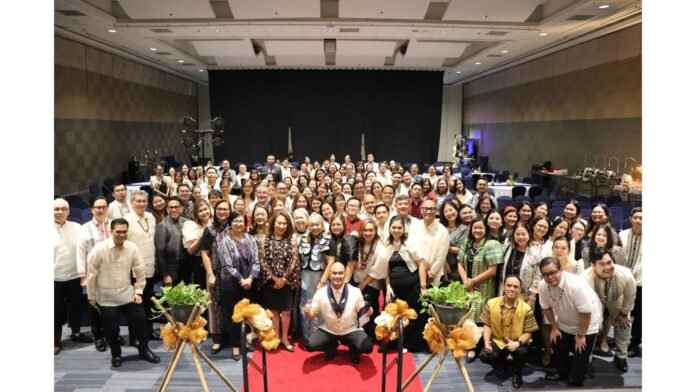
SM Hotels and Conventions Corporation (SMHCC) has earned consecutive recognition from two distinguished award-giving bodies, affirming the company’s continued dedication in creating a workplace where people are empowered to grow, connect, and go beyond.
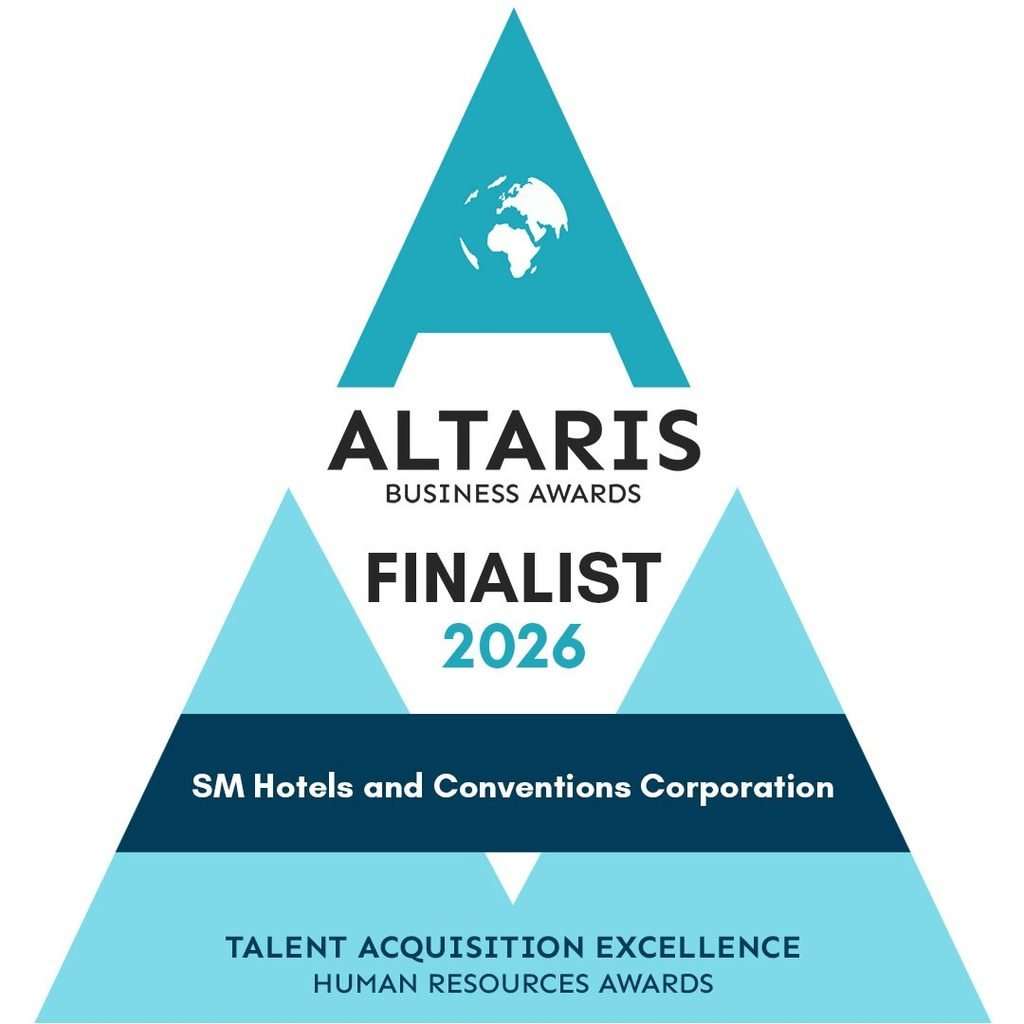
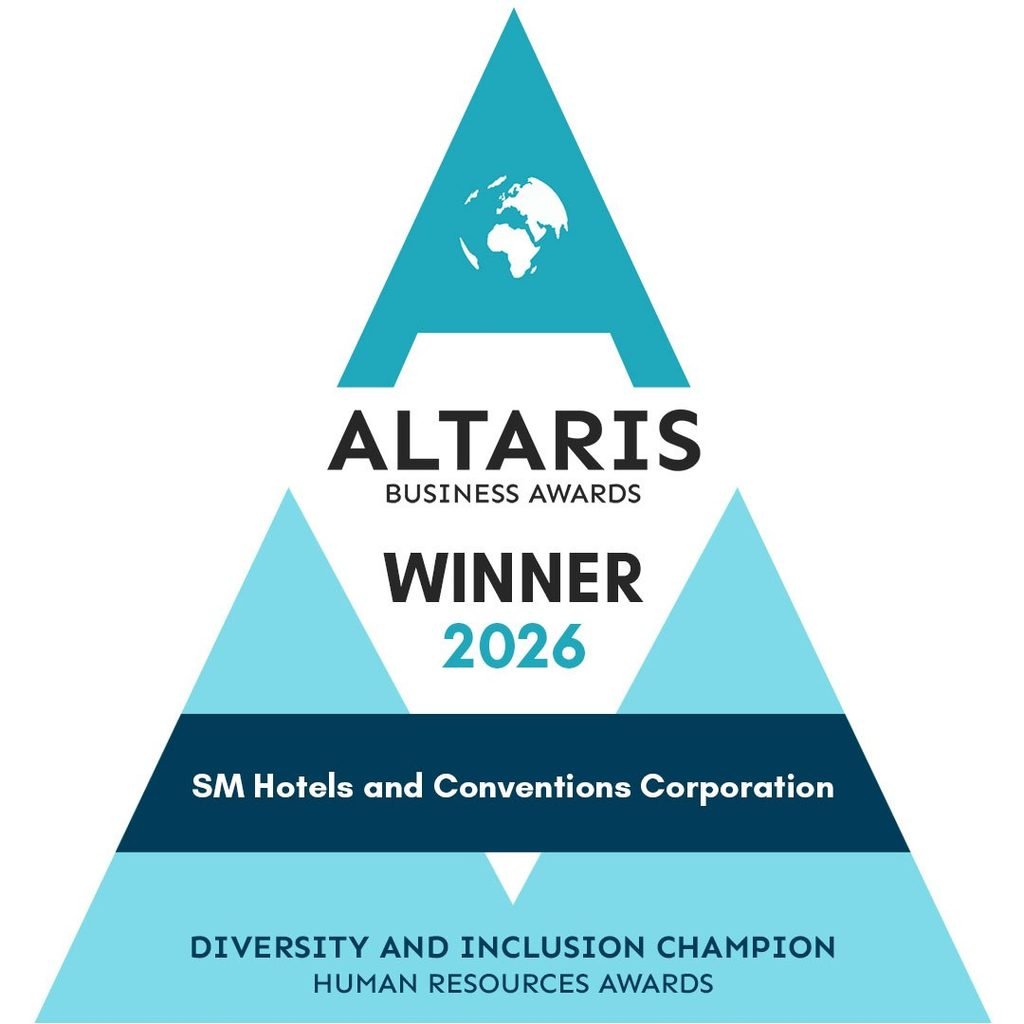
SMHCC was named Diversity & Inclusion Champion at the 2026 Altaris Business Awards – Human Resources Awards, a global awards program recognizing business innovation and success across industries. The company also emerged as a finalist for Learning & Development Excellence and Talent Acquisition Excellence, making SMHCC the only company to appear three times among the seven organizations named to the finalists and winners list.
The recognition highlights SMHCC’s approach to fostering an inclusive workplace where employees across generations, abilities, backgrounds, and identities are given equitable opportunities to contribute and advance. Its entry showcased initiatives developing and celebrating women in traditionally male-dominated roles, LGBTQ+ inclusion, and forging partnerships with organizations that advocate for persons with disabilities and senior citizens, as well as community-based programs, which extend the principles of inclusion beyond the workplace.
SMHCC’s Learning & Development Excellence finalist recognition further underscores its structured learning culture, with programs such as We Go Beyond, leadership and capability-building initiatives like R.I.S.E. and L.E.A.D. Beyond, and specialized training that support employees across technical, service, leadership, and personal competencies. Meanwhile, its Talent Acquisition Excellence finalist recognition reflects a talent strategy that goes beyond filling vacancies by building sustainable talent pipelines through strategic sourcing, school and institutional partnerships, internships, inclusive recruitment, and employer branding.
Adding to this momentum, SMHCC was also named a winner of the Best Employee Engagement Program at the TalentView People Insights Awards 2026, which recognizes organizations transforming the future of work through meaningful workplace and people initiatives.
The award recognizes SMHCC’s deliberate efforts to strengthen employee connection, belonging, and engagement through a culture of listening, meaningful experiences, growth, recognition, and open communication. Programs such as We Go Beyond Pocket Sessions, HR Hour, Wednesday Wisdom, Kapihan, Stay Interviews, HAY Sessions, and the President’s Go Beyond Awards create regular opportunities for employees to engage with leaders, share their voices, learn, receive recognition, and build stronger relationships across the organization.
“These recognitions affirm that our people strategies are not simply programs on paper. They are reflected in the experiences of our employees every day,” said Charmagne Adonis, SMHCC Vice President for Human Resources and Organizational Development. “For us, going beyond means creating an environment where every person feels heard, valued, connected, and empowered to contribute. Whether through inclusion, learning, talent development, or engagement, we remain committed to building a culture where our people can grow with the organization and, in turn, help us go beyond what is expected.”
The back-to-back recognitions reinforce SMHCC’s belief that organizational excellence begins with investing in people. By bringing together inclusive opportunities, continuous learning, strategic talent development, and meaningful employee engagement, SMHCC continues to strengthen a people culture that supports both individual potential and the organization’s goals in the hospitality and conventions industry.
For SMHCC, these awards are more than external validation. They are a reflection of a workplace culture built with its people, sustained by its people, and driven by their collective commitment to go beyond.
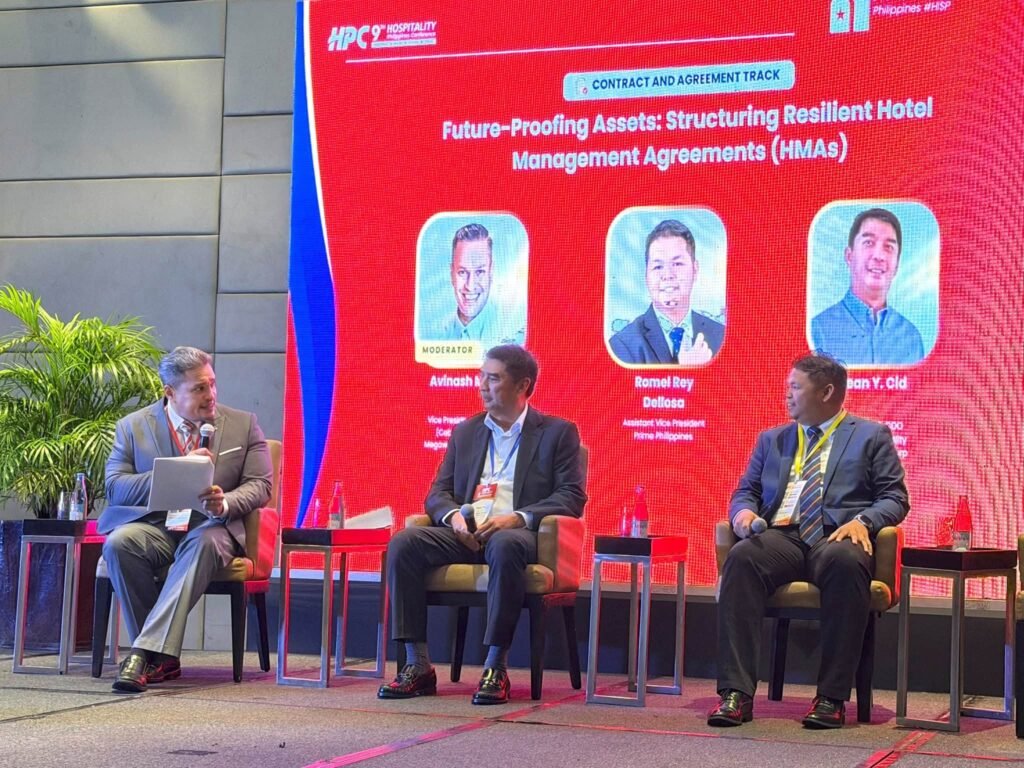
Avinash Menon, Vice President for Operations, moderated the session Future-Proofing Assets: Structuring Resilient Hotel Management Agreements
As Megaworld Global Hotels & Resorts (MGHR) builds toward a larger hospitality portfolio by 2032, the focus is not simply on adding more hotels and rooms, but on strengthening the capabilities needed to grow well. At the 9th Hospitality Philippines Conference held September 9–10, 2026, in Manila, three MGHR leaders shared perspectives on what that growth will increasingly require: stronger partnerships, smarter operating structures, and a deeper understanding of what guests value.
Building Beyond Homegrown Brands
As MGHR expands its portfolio, the group is also preparing to work across a wider mix of hotel brands, partners, owners, and markets.
Avinash Menon, Vice President for Operations, moderated the session Future-Proofing Assets: Structuring Resilient Hotel Management Agreements, where he discussed how hotel management agreements can provide the right balance of structure, accountability, and flexibility between owners and operators.
“Resilience in a hotel management agreement (HMA) is not about predicting every disruption—it is about creating a framework that can respond when change comes,” Menon said.
He highlighted the importance of clear performance benchmarks, transparent reporting, disciplined cost and capital controls, and alignment between owners and operators.
“A strong HMA protects long-term asset value through clear performance benchmarks, transparent reporting, disciplined cost and capital controls, and sufficient flexibility for owners and operators to adapt as markets, guest expectations, and operating realities evolve,” he added.
The discussion is increasingly relevant as MGHR moves from a portfolio built largely around its homegrown hotel brands toward a broader hospitality platform that will also include more global brands and external partnerships.
For MGHR, building scale means not only expanding geographically, but also developing stronger relationships and management frameworks that can support different brands, owners, and hotel concepts over the long term.
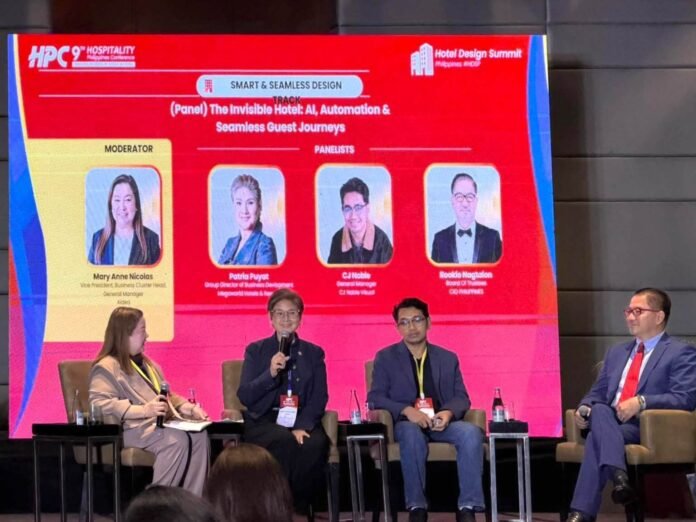
Patria Puyat, Vice President for Business Development, joined the panel The Invisible Hotel: AI, Automation & Seamless Guest Journeys.
Building The Structures Behind The Experience
Expansion also brings a different challenge: making sure the systems supporting each hotel can grow as efficiently as the physical portfolio itself.
Patria Puyat, Vice President for Business Development, joined the panel The Invisible Hotel: AI, Automation & Seamless Guest Journeys, where she discussed how technology can help make hospitality more intuitive, personalized, and seamless.
“We have always been moving towards hospitality that is more intuitive, personalized and seamless, with the help of technology quietly removing friction and bottlenecks from the guest journey,” Puyat said.
For Puyat, however, a smarter hotel is not defined by visible technology alone.
“What should never change is the human connection at the heart of hospitality or the feeling of being welcomed, understood and genuinely cared for. MGHR is leveraging innovation to create more meaningful guest experiences while preserving what makes hospitality human,” she added.
As MGHR develops more hotels, these “invisible” structures will become increasingly important—whether through systems that improve efficiency and decision-making or through people who consistently deliver thoughtful, personal service.
For the group, the goal is not simply to build more spaces, but to make those spaces work better, feel more seamless, and remain memorable to the guest.
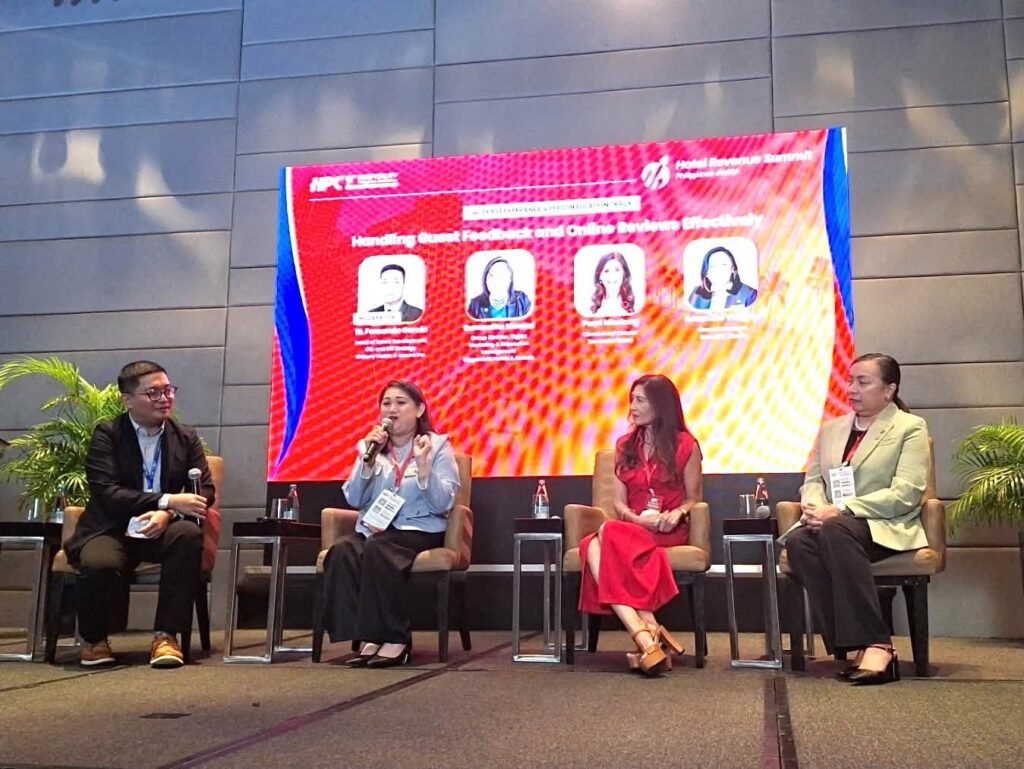
Samantha Manuel, Group Director of Digital Marketing and Reputation Management, joined the panel Handling Guest Feedback and Online Reviews Effectively.
Turning Guest Feedback Into Brand Value
Ultimately, the success of growth is measured by how guests experience it.
Samantha Manuel, Group Director of Digital Marketing and Reputation Management, joined the panel Handling Guest Feedback and Online Reviews Effectively, where she discussed the growing relationship between guest feedback, public reputation, and booking confidence.
“Every guest experience contributes to a hotel’s public reputation, making it essential to listen, respond, and act on guest feedback in ways that build trust,” Manuel said.
For Manuel, feedback goes beyond measuring individual experiences. It also provides insight into what guests increasingly expect and value from hotel brands.
“We see feedback not simply as a measure of performance, but as an opportunity to continuously learn, improve, and strengthen the guest relationship. Being future-ready means looking beyond what guests are saying today, anticipating evolving expectations, turning insights into meaningful improvements, and consistently elevating the experience,” she added.
As MGHR grows across more destinations, brands, and guest segments, understanding these signals will become increasingly important in strengthening brand equity and maintaining confidence across the portfolio.
Building More, And Building Right
MGHR is working toward a portfolio of close to 12,000 hotel rooms by 2032, with growth expected across both homegrown and global hospitality brands.
That expansion will require more than new developments. It will require stronger partnerships to support a broader portfolio, efficient systems that can operate at scale, and closer attention to the experiences guests value and celebrate.
The perspectives shared by Menon, Puyat, and Manuel at this year’s Hospitality Philippines Conference reflect those priorities.
For MGHR, the road to 2032 is not simply about building more hotels. It is about building the relationships, systems, and experiences that will allow the group to grow well—and ensuring that each new development strengthens the business and the guest experience behind it.
"Reggie," a 31-year-old welder from Cavite, poses with BingoPlus President Jasper Vicencio
after winning a PHP 22 million jackpot
“Reggie,” a 31-year-old welder from Cavite, takes on the huge responsibility of being a responsible gamer after winning a massive PHP 22 million BingoPlus jackpot.
BingoPlus continues to showcase how a player’s responsible gaming habits and a secure, trusted platform intersect to reinforce real-life decisions, as it presents real winners with real stories to tell of their exhilarating winning moments.
“Reggie,” a 31-year-old welder from Cavite, recently secured a staggering grand jackpot of PHP 22,021,209.17 off a single 20-peso bet while playing Super Ace Jackpot on BingoPlus.
Upon receiving immediate confirmation of his win from the platform through a phone call, the former truck helper’s mind did not wander to grander dreams of wealth, instead displaying incredible discipline by setting in motion his longtime dream to be businessman in the food industry.
“Yung inisip ko, i-cash in ko na ito lahat para kung maubos na ito, tigilan na. Yun, buti nga na naka-jackpot. Gulat nga ako noon. Akala ko hindi totoo,” Reggie told BingoPlus in an exclusive interview, while also noting how the platform quickly assured him that his winnings were neither a glitch nor a scam.
Now a real multimillionaire thanks to BingoPlus’ fast and secure payout system, Reggie plans to either set up a small fish store or a roasted chicken business to get an initial foothold in the industry.
What is not up for debate, however, is his plan to build a house for his parents, so that they may also experience city life.
“Pangarap ko po makapagpatayo ng bahay para sa magulang ko. Dahil sa panalo ko, may extra money ako at mas mapapabilis ko ang mga plano ko,” Reggie said.
“Reggie” tells his life story and winning moment in an interview at the BingoPlus office
Reggie’s approach highlights one of BingoPlus’ core messages that gaming achieves its highest value when paired with deliberate, player-driven decisions. Instead of treating the win as a license to game bigger, Reggie channeled directly into capital-generating plans–already thinking how his new money could last.
Reggie never planned to win big–no one does–but he knew how to plan for what now lies ahead in the face of bigger financial responsibilities. For Reggie, the win was never solely a reward for him to immediately spend.
“Hindi ko in-expect na mananalo ako ng ganitong kalaki at magiging jackpot winner,” Reggie said. “Thank you, BingoPlus.”
Reggie’s story is just one of many true tales that BingoPlus is proud to present. When will yours start? Visit bingoplus.com or download the app on iOS or Android to know more.
Play responsibly. BingoPlus is licensed and regulated by PAGCOR.
Rainy season is not just a change in weather. For millions of Filipino home and car owners, it is that time of the year when more risks threaten everything they have worked and paid for.
The Philippines is one of the most disaster-prone countries in the world, contending with typhoons, flooding, earthquakes, volcanic eruptions, landslides, drought, and fires. They are recurring realities impacting communities across the country with little warning yet significant financial consequences.
The response for most households is hope. Hope that the flood does not exceed ground floor. Hope that the car makes it through the intersection. Hope that this year, at least, nothing goes seriously wrong,
Hope, unfortunately, is not a financial plan.
Gap most families do not see coming
A home and an auto loan are tangible proofs of life’s major milestones. Because these commitments span several years—often 20 to 25 years for a home, and 3 to 5 years for a vehicle—securing them with comprehensive insurance ensures your investments remain protected through every stage of ownership
A typhoon can cause damage that costs hundreds of thousands of pesos to repair, while the mortgage continues. A car submerged in a flood still has an outstanding balance attached to it.
With proper insurance coverage in place, your family can navigate major repairs smoothly without tapping into emergency funds or straining monthly cash flow. Securing your financing with insurance turns long-term obligations into resilient, protected assets—giving you complete peace of mind no matter what comes your way.
What being insured actually means
A comprehensive home insurance policy covers or pays for repair or rebuilding costs from fire, typhoons, floods, and other natural calamities. This means that the financial burden is absorbed by the insurance company, not the family. Some policies also cover the contents of the insured home, providing a broader safety net when damage is extensive.
For car owners, a comprehensive auto insurance policy covers repair costs from accidents regardless of fault, as well as theft, natural calamities, and third-party liability, which covers damage or injury to other people or their property. Without it, an at-fault driver can be personally liable for costs that far exceed the value of the car itself.
Whether a home or auto, the practical effect of being insured is the basically same. When something goes wrong, the financial blow is absorbed by the insurance policy rather than the family. Thus, savings remain intact, and the household has one less crisis to deal with.
What to do next
Non-life insurance is more accessible than most people think. RCBC, through its partnership with the Malayan Insurance Co. Inc. (Malayan Insurance), makes it easy for home and auto loan borrowers to get the protection they need without having to go through a separate process. Malayan Insurance offers a range of products covering fire, natural calamities, theft, vehicular accidents, and more, providing protection built around risks that Filipino home and car owners face every year.
If you have a home or auto loan and want to make sure assets are protected, walk into any RCBC branch to find out what coverage options are available.
Because the best time to think about what may happen when the rains come, is before they do.
Thirty micro, small and medium enterprises (MSMEs) from Sorsogon are set to present their locally crafted goods at the Kasanggayahan Sorsogon GoConut Trade Fair 2026 at Level 2 Grand Atrium, Shangri-La Plaza Mall in Mandaluyong City.
Organized by the Department of Trade and Industry (DTI) Sorsogon Provincial Office, the fair gives provincial entrepreneurs direct exposure to urban consumers, institutional buyers, distributors and new commercial partners.
Exhibitors will feature a broad selection of coconut- and pili-based offerings, including virgin coconut oil, coco jam, vinegar, traditional delicacies, pastries and preserves. The event will also highlight non-food items—from abaca products, apparel and accessories to baskets, home decor, coconut-shell crafts, packaging materials and sustainable charcoal innovations.
For the participating businesses, the trade fair provides a vital venue to drive sales, gather direct consumer feedback and build key industry connections.
Nine of the 30 enterprises are making their trade fair debut, giving emerging brands a chance to test their goods in a major metropolitan market. Meanwhile, 21 returning vendors aim to broaden their customer base and introduce new or refined product lines.
The exhibitors represent Sorsogon City and 12 municipalities across the province, including Barcelona, Bulan, Bulusan, Castilla, Donsol, Gubat, Irosin, Juban, Matnog, Pilar, Prieto Diaz, and Sta. Magdalena.
Beyond generating immediate sales, the trade fair highlights how Sorsogon’s abundant natural resources—such as coconut, pili, abaca—can be transformed into high-value products that drive sustainable local economic growth.
Visitors can explore the fair and support these regional entrepreneurs throughout its four-day run at Shangri-La Plaza Mall.
The Department of Trade and Industry (DTI) is set to elevate local talent and champion Filipino creativity as it hosts the ASEAN Creative Industries Expo by Malikhaing Pinoy (ASEAN MPEx). Organized in collaboration with the Philippine Creative Industries Development Council Secretariat, the three-day event will run from September 17 to 19, 2026, at the SMX Convention Center Aura in Taguig City.
The expo is part of the government’s flagship Malikhaing Pinoy Program, implemented by the DTI to advance the country’s creative agenda and celebrate its rich cultural heritage. Guided by the theme “Navigating Our Future Through Creativity, Together,” the initiative coincides with the Philippines’ ASEAN Chairship in 2026, reinforcing its commitment to inclusive economic growth, cross-border investments, and regional cultural exchange.
Held during Philippine Creative Industries Month and mandated under Republic Act No. 11904, or the Philippine Creative Industries Development Act (PCIDA), ASEAN MPEx builds on the success of the 2025 interaction. The event centers on the three key calls to action—Connect, Showcase, and Create—aimed at expanding opportunities for local creatives and enterprises.
The exhibition will highlight talent across nine creative domains, namely Audiovisual Media, Creative Services, Cultural Sites, Digital Interactive Media, Design, Performing Arts, Publishing and Printed Media, Traditional Cultural Expressions, and Visual Arts.
Designed as a convergence platform, the expo features a Government and Business Development Services Pavilion, where entrepreneurs can access trade and intellectual property services. Other highlights include the ASEAN Malikhaing Pinoy Pavilion, a digital interactive space highlighting creative initiatives across the region, and a Coconut Industry Pavilion demonstrating how design can transform traditional sectors.
Additionally, attendees can explore a gastronomy showcase featuring Iloilo—a UNESCO Creative City for Gastronomy—and view a special presentation on the Philippines’ participation in Expo 2025 Osaka.
As the Philippines works toward its vision of becoming Asia’s Premier Creative Hub by 2030, ASEAN MPEx aims to bridge local talent with new regional markets, driving innovation, investment, and sustainable national development.
Senator Lito Lapid is pushing for free comprehensive health checkups for indigent senior citizens, seeking to help elderly Filipinos detect illnesses early without being burdened by the cost of medical examinations.
Under Senate Bill No. 2433, Lapid proposes that senior citizens aged 60 and above who are certified as indigent by their respective Local Social Welfare and Development Offices be provided with free executive or comprehensive health checkups.
The proposed program would cover consultations, laboratory tests, disease-risk screening and other necessary medical examinations.
The free checkups would be made available through Department of Health hospitals, local government hospitals, rural health units and accredited private health facilities.
Under the proposal, qualified indigent senior citizens would be entitled to a free executive checkup once every three years, with priority given to bedridden elderly persons and those living in geographically isolated and disadvantaged areas.
Lapid said the proposal recognizes the continuing financial difficulties faced by many elderly Filipinos, particularly those who cannot afford preventive healthcare.
As a senior citizen himself, Lapid said that while existing laws—including the Expanded Senior Citizens Act and the Universal Health Care Act—provide various forms of assistance and healthcare benefits, many indigent elderly Filipinos still struggle to shoulder the cost of medical examinations, even before treatment becomes necessary.
He emphasized the importance of preventive healthcare, noting that regular medical screening can help identify potential health problems before they become more serious and costly to treat.
Meanwhile, Senate President Francis “Chiz” Escudero called for a broader review of the definition of indigency, noting that eligibility should not be limited to membership in the Pantawid Pamilyang Pilipino Program (4Ps).
Escudero pointed out that there are families who may have a source of income but still cannot afford the high cost of medical treatment and other essential services.
He cited situations involving individuals who could be considered “medical or cancer indigents” because of the overwhelming cost of treatment, as well as “litigation indigents” who may need legal proceedings but cannot afford expenses that could reach hundreds of thousands of pesos.
The proposed measure seeks to strengthen access to preventive healthcare for vulnerable senior citizens and help ensure that poverty does not become a barrier to early detection and timely medical intervention.