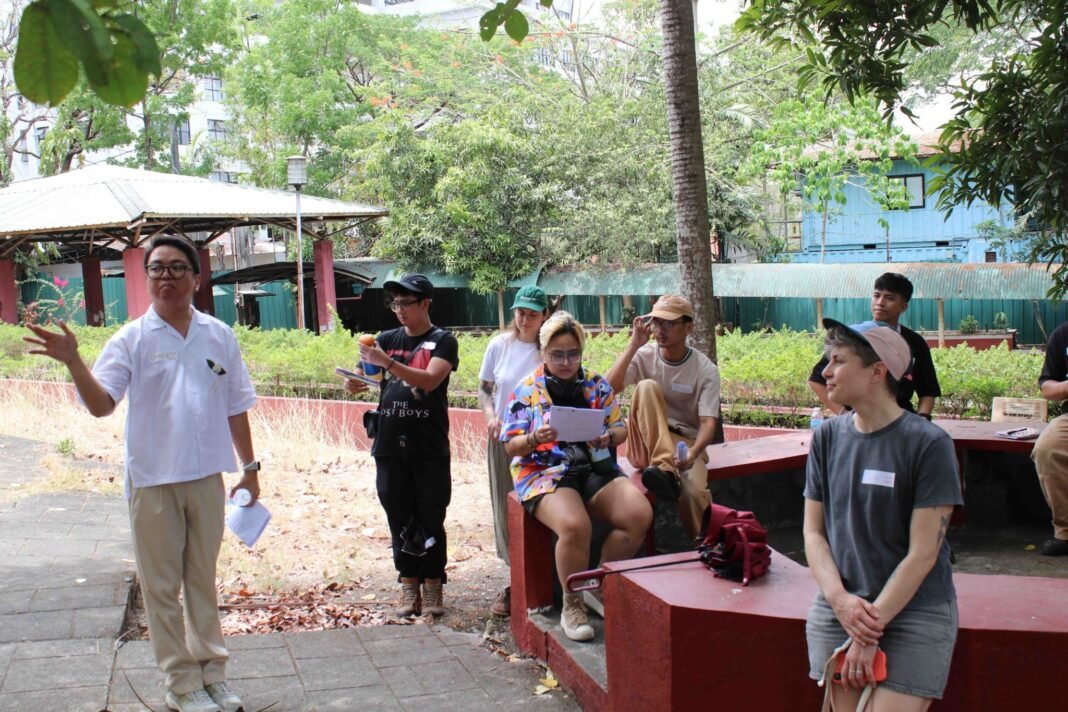

University College London (UCL), in partnership with the College of Arts and Letters at the University of the Philippines Diliman, launched Queer Community College Philippines (QCCP) as a two‑day free public programme on queer theory, identity, culture, and education held in Manila last April. The initiative builds on the Queer Community College series inaugurated at London’s QUEERCIRCLE in 2024, with support from the British Council.
Against the backdrop of evolving conversations on gender and inclusion in the Philippines, QCCP presents a fresh model for learning that moves beyond classrooms and draws on lived experience, community, and creative practice.
As an open, community‑led platform, QCCP brought together academics, artists, cultural practitioners, and activists from the Philippines and the UK. Through talks, discussions, and creative workshops, participants explored LGBTQIA+ knowledge in ways that were accessible, care‑centred, and grounded in lived experience. Gender and sexuality advocacy group PANTAY collaborated closely on the programme to ensure conversations remained rooted in local realities.
Unlike traditional academic programmes, QCCP welcomed participants regardless of their familiarity with queer theory. Learning unfolded through dialogue, artistic practice, and shared reflection, highlighting how art and education can work together to expand how knowledge is created and shared.
“We don’t necessarily separate educational work from artistic work. We use artistic methods to educate and to discuss topics usually relegated to classrooms and lectures… Artistic practices are part of knowledge production, so they are inherently educational, just as education itself can be creative,” said Dr. Roselle Pineda, College of Arts and Letters, UP Diliman.
For UCL, the programme reflects a commitment to bringing queer ways of knowing beyond academic institutions and into communities.
“Our aim has always been to bring queer ways of knowing and thinking out of academia and into the community to make it accessible and empower communities to drive positive change,” said Dr. Simon Lock, Professor of Science, Politics and Culture at UCL.
QCCP was developed collaboratively by UCL, UP Diliman, and PANTAY, with support from the British Council, bringing together practitioners across disciplines to explore how culture, education, and activism intersect.
“Programmes like Queer Community College are essential to the British Council’s work in the arts,” said Andrei Nikolai Pamintuan, Head of Arts at the British Council Philippines.“Initiatives like this help build a cultural sector that values diversity, nurtures marginalised voices, and enables creatives across the Philippines to thrive.”
Grounded in creativity, care, and community, Queer Community College Philippines shows how inclusive cultural and educational initiatives can spark meaningful exchange, strengthen UK-Philippines connections, and open new conversations on gender and learning.
For more information, visit www.britishcouncil.org